
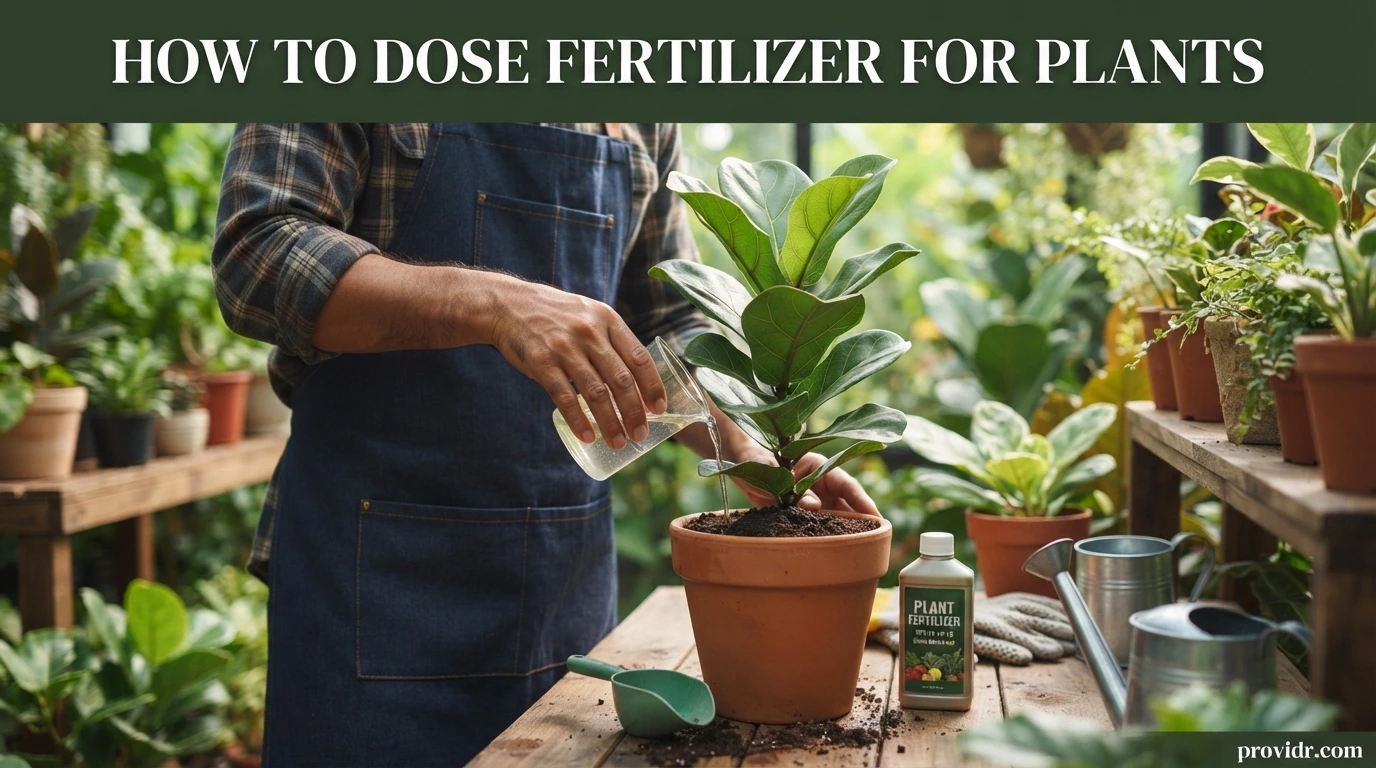
How to Dose Fertilizer for Plants: A Complete Guide to Feeding Your Garden Right
Too much fertilizer can burn your plants. Too little leaves them weak and pale. Getting the dose right is the difference between a thriving garden and a struggling one.Here’s the short answer of How to Dose Fertilizer for Plants: A Complete Guide to Feeding Your Garden Right: always follow the dosage on your fertilizer’s label, based on your plant type and container size, and never guess. Most liquid fertilizers use a ratio like one tablespoon per gallon of water. Most granular fertilizers use a set amount per square foot of soil. When in doubt, use less than the label suggests, not more. Under-feeding is easy to fix. Over-feeding can damage roots and take weeks to correct.
This guide covers everything else you need. You’ll learn how fertilizer works, how to read the numbers on the bag, and exactly how much to use for vegetables, flowers, lawns, trees, houseplants, and more.
What Is Fertilizer and How Does It Work?
Fertilizer is a concentrated source of nutrients that plants need to grow. Soil naturally holds nutrients, but plants use them up over time. Fertilizer replaces what’s missing.
Plant roots absorb these nutrients dissolved in water. That’s why fertilizer only works well when your soil has good moisture and drainage. Dry soil can’t move nutrients to the roots. Waterlogged soil can wash nutrients away before roots absorb them.
Fertilizer doesn’t replace healthy soil. It supplements it. Good soil structure, organic matter, and proper watering matter just as much as the fertilizer itself.
Organic vs. Synthetic Fertilizer
| Feature | Organic Fertilizer | Synthetic Fertilizer |
| Source | Compost, manure, bone meal, fish emulsion | Manufactured chemical compounds |
| Nutrient release | Slow, as microbes break it down | Fast, often within days |
| Risk of burn | Low | Higher if overdosed |
| Soil health impact | Improves soil structure over time | Neutral to soil structure |
| Cost | Often cheaper if homemade | Usually cheaper per application |
| Best for | Long-term soil building | Quick nutrient correction |
Neither type is universally better. Many experienced gardeners use both. Organic fertilizer builds healthy soil over months and years. Synthetic fertilizer offers a fast fix when plants show clear deficiency signs.
Read More: https://providr.com/why-the-worlds-biggest-industries-refuse-to-move-on-from-legacy-tech/
Understanding NPK: Nitrogen, Phosphorus, and Potassium
Every fertilizer bag shows three numbers, like 10-10-10 or 5-10-5. This is the NPK ratio. It tells you the percentage of nitrogen, phosphorus, and potassium in the bag.
What Each Nutrient Does
- Nitrogen (N): Drives leafy, green growth. Great for lawns, leafy vegetables, and early growth stages.
- Phosphorus (P): Supports root development, flowering, and fruiting. Important for flowers, fruit trees, and root vegetables.
- Potassium (K): Strengthens overall plant health, disease resistance, and water regulation. Useful for all plants, especially under stress.
How to Read an NPK Ratio
A bag labeled 10-10-10 contains 10% nitrogen, 10% phosphorus, and 10% potassium by weight. The remaining 70% is filler material and trace nutrients.
A bag labeled 5-10-5 has less nitrogen and more phosphorus. This works well for flowering plants that need blooms, not extra leaves.
Choosing the Right NPK Ratio by Plant Type
| Plant Type | Ideal NPK Ratio (approximate) | Why |
| Leafy vegetables | 10-5-5 or higher nitrogen | Promotes leaf growth |
| Flowering plants | 5-10-5 or balanced | Boosts blooms |
| Root vegetables | 5-10-10 | Supports root and tuber growth |
| Lawns | 20-5-10 or high nitrogen | Encourages green grass growth |
| Fruit trees | 10-10-10 or 8-8-8 balanced | Supports fruiting and overall health |
| Succulents and cacti | 2-7-7 low nitrogen | Prevents leggy, weak growth |
| Houseplants (general) | 10-10-10 or balanced, diluted | Gentle, steady feeding |
| Herbs | 5-5-5 balanced, light dose | Prevents overly strong flavor loss |
How to Fertilize Different Plant Types
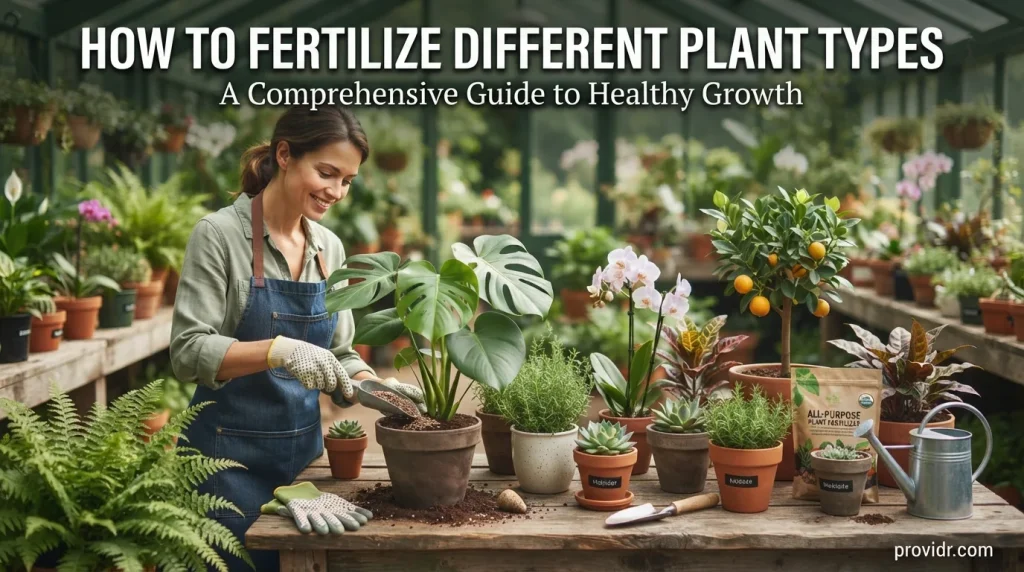
How to Dose Fertilizer for Plants: A Complete Guide to Feeding Your Garden Right complete guide
Vegetables
Vegetables are heavy feeders. Most benefit from fertilizing every 3 to 4 weeks during the growing season. Leafy greens like lettuce and spinach want more nitrogen. Fruiting vegetables like tomatoes and peppers want more phosphorus and potassium once flowering starts.
Flowers
Flowering annuals and perennials do well with a balanced or phosphorus-heavy fertilizer every 2 to 4 weeks during bloom season. Reduce or stop feeding in fall and winter when growth slows.
Herbs
Herbs need light feeding. Too much fertilizer, especially nitrogen, can reduce the essential oils that give herbs their flavor and scent. Feed lightly once a month at most.
Lawns
Lawns need nitrogen-heavy fertilizer, typically 3 to 4 times a year: early spring, late spring, late summer, and fall. Always water lawns after granular application to help nutrients reach the roots.
Trees and Shrubs
Established trees and shrubs often need fertilizing only once a year, in early spring. Young trees may benefit from light feeding twice a year. Use a slow-release granular fertilizer spread around the drip line, not against the trunk.
Indoor Plants
Houseplants grow slower than outdoor plants, especially in low light. Feed most indoor plants every 4 to 6 weeks during spring and summer. Stop or greatly reduce feeding in fall and winter when growth naturally slows.
Succulents and Cacti
Succulents need very little fertilizer. A light, diluted feeding once every 6 to 8 weeks during the growing season is plenty. Overfeeding causes weak, stretched-out growth.
Container Gardens
Potted plants lose nutrients faster than plants in the ground because watering washes nutrients out through drainage holes. Container plants typically need more frequent, lighter feeding than the same plant grown in open soil.
Step-by-Step: How to Apply Fertilizer Correctly
Step 1: Identify Your Fertilizer Type
Check whether you have liquid, water-soluble powder, granular, slow-release, or organic compost-based fertilizer. Each has a different application method.
Step 2: Read the Label Dosage First
Every fertilizer brand has a slightly different concentration. Always start with the label’s recommended dose. Treat it as a maximum, not a target.
Step 3: Measure Accurately
Use a proper measuring spoon or cup, not a guess. Overestimating even sl