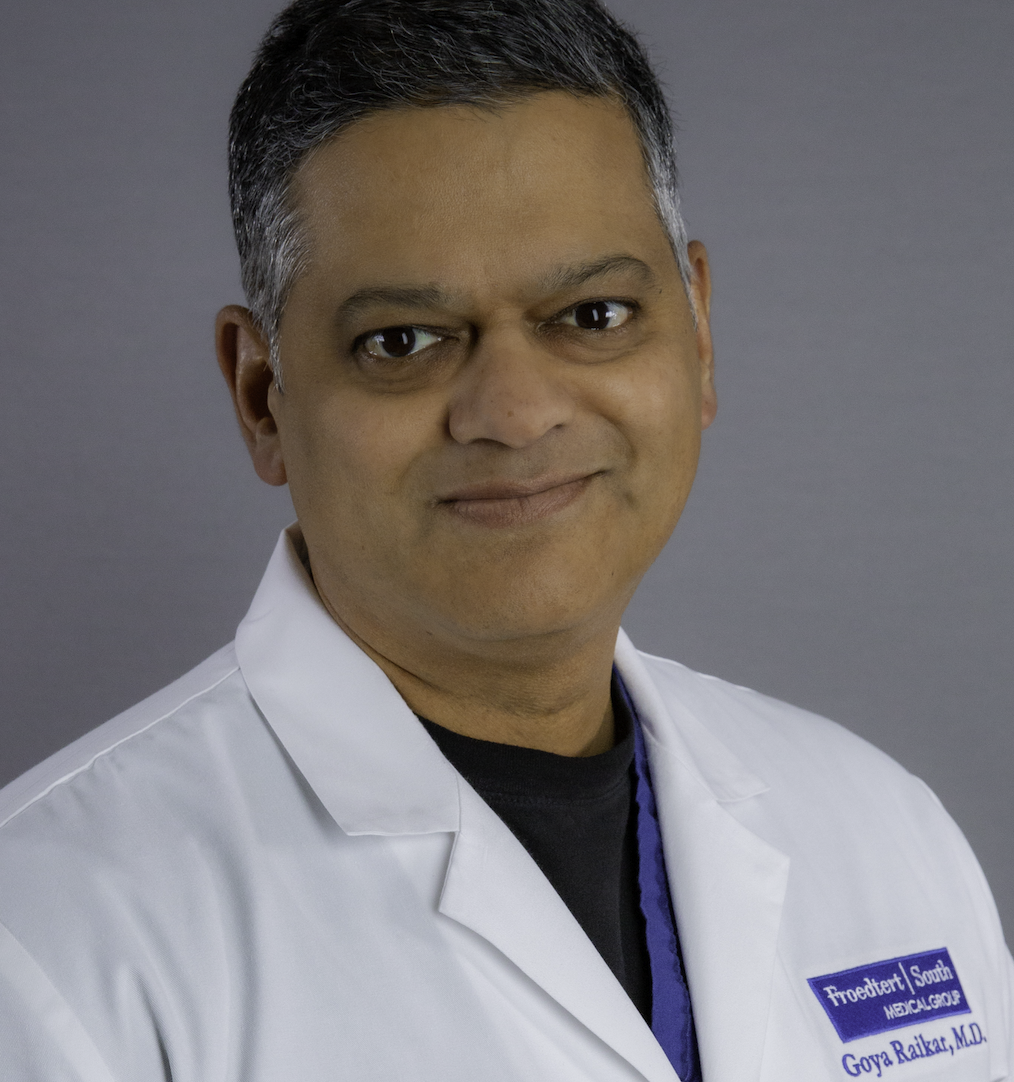
Dr. Goya Raikar Leading Robotic Cardiac Surgery Excellence at Froedtert South
Establishing Leadership in Robotic Cardiac Surgery
Dr. Goya Raikar leads the advancement of robotic cardiac surgery as Chief Cardiac Surgeon at Froedtert South, where he is focused on building a structured and sustainable program centered on precision, teamwork, and patient outcomes. His role extends beyond the operating room. It includes shaping systems, aligning teams, and creating a model that supports long term growth in minimally invasive cardiac care.
Dr. Raikar has over 20 years of experience performing surgery and leads with the technical skills necessary but also brings years of hospital administration and leadership to his role. He has completed training through the top hospitals in the country and has been in leadership roles in many hospital systems, giving him the experience necessary to develop new programs clearly, and disciplined.
At Froedtert South, his objective is direct. He is building a center of excellence that integrates robotic technology with strong clinical processes and a coordinated care team.
From Surgical Expertise to Program Builder
Robotic cardiac surgery programs do not begin with equipment alone. They begin with leadership. Dr. Raikar’s career reflects this progression from individual surgeon to program builder.
His early exposure to mitral valve repair during his training helped define his clinical focus. Learning from experienced surgeons provided a strong technical base. Over time, that base expanded into broader responsibility. He moved beyond performing procedures and began guiding how institutions adopt and refine advanced techniques.
He has held leadership and academic roles at the University of Oklahoma, Oklahoma Heart Hospital, and the Medical College of Wisconsin. Each role contributed to his understanding of how to build surgical programs that operate consistently across different settings.
This experience now shapes his work at Froedtert South. Robotic surgery is not treated as an isolated capability. It is part of a larger system that includes training, communication, and patient trust.
The Foundation of a Robotic Cardiac Surgery Program
Building a robotic cardiac surgery program requires more than acquiring advanced tools. It requires a coordinated strategy that begins with the surgeon and extends across the entire care team.
Dr. Raikar emphasizes that successful programs are built around a shared vision. Surgeons, anesthesiologists, cardiologists, nurses, and hospital leadership must align on expectations. Without alignment, results become inconsistent.
The process begins with identifying the right surgical leadership. From there, teams are assembled and trained to operate within a structured environment. Each member must understand their role and how it contributes to the procedure.
Consistency is a must in robotic systems. In an operating room, everything from timing to communication to scheduling has to be in sync for the team to perform successfully. A breakdown in any one aspect can hamper the team’s ability to successfully complete the surgical procedure.
Using this approach creates a way to create a system that is not reliant on any individual. It creates a way to make the operation reproducible and scalable, which is critical to the continued growth of long-term-programs.
Technology as an Extension of Surgical Skill
Robotic cardiac surgery offers enhanced visualization and control compared to traditional methods. Surgeons are able to operate with three dimensional imaging and significant magnification. This allows for a clearer view of cardiac structures.
Dr. Raikar highlights how this level of visualization supports precision, especially in procedures such as mitral valve repair. The robotic platform allows for controlled movement in confined spaces, which can reduce trauma to surrounding tissue.
Robotic equipment improves surgical judgement. It does not replace it. Operations using robotic instruments rely upon the surgeon’s judgement and experience as to whether or not it will be successful.
At Froedtert South, evolutionary healthcare has created an integrated approach to using technology within their established clinical frameworks where all personnel follow the same protocols which facilitates consistency, training, and precise execution, which supports improved patient safety.
Training and Continuous Development
Dr. Raikar has made a commitment towards creation of his robotic cardiovascular surgery program by developing his educational programs and providing excellent patient care.
He continues to participate in education through attendance at educational meetings, presenting research data, and working collaboratively with other physicians. These activities will enable him to continue to learn new techniques and improve his skills and knowledge base in robotic cardiovascular surgery.
Training extends to the full surgical team. Robotic procedures require coordination beyond traditional surgery. Each team member must understand both the technology and the workflow.
Dr. Raikar emphasizes repetition and preparation. Teams must practice together and develop consistency. This reduces variability and supports better outcomes.
Mentorship is also a central part of his work. He guides other surgeons and teams in robotic techniques, contributing to the broader growth of the field. His involvement in professional communities reflects a commitment to advancing cardiac surgery beyond his own institution.
Building Patient Trust Through Communication
Advanced surgical approaches can create uncertainty for patients. Robotic cardiac surgery often requires clear explanation to help patients understand their options.
Dr. Raikar views communication as a key part of care. He focuses on explaining complex procedures in a way that patients and families can understand. This clarity helps reduce anxiety.
He also places importance on listening. Patients often arrive with concerns and fears. Allowing them to speak and addressing those concerns directly helps build trust.
Froedtert South’s Communication Strategy is in line with the overall purpose of their program, working to support a system of care that promotes a balance between patient centered care and technology based care.
Trust is built throughout the entire care process, not just at the end, and communication plays a critical role in establishing trust in each phase of the care process, from the initial consultation all the way through rehabilitation.
Managing Complexity and Risk
Cardiac surgery carries inherent risk, and robotic procedures add another layer of complexity. Managing these factors requires a structured approach.
Dr. Raikar relies on established clinical data when making decisions. He emphasizes using techniques that have demonstrated consistent results over time. This reduces uncertainty and supports patient safety.
Collaboration is also essential. Complex cases often require input from multiple specialists. Engaging with other experts ensures that each case is approached carefully.
This methodology contains both cautiousness and progressiveness. Robotic surgery provides alternatives beyond the current method of treating patients; however, the correct procedures must be used for it to be successful and controlled.
At Froedtert South, this approach is reflected in how procedures are planned and executed. Decisions are guided by both experience and evidence.
Institutional Growth Through Collaboration
A center of excellence depends on more than individual skill. It requires strong institutional alignment.
Dr. Raikar’s approach emphasizes collaboration across all levels of the hospital. Leadership, clinical teams, and support staff all contribute to the program’s success.
This model allows the program to grow in a structured way. New capabilities are integrated into existing systems rather than added separately.
His previous leadership roles have reinforced the importance of this approach. Successful programs align clinical goals with institutional priorities.
At Froedtert South, this alignment supports both the development and sustainability of the robotic cardiac surgery program.
A Career Defined by Leadership and Advancement
Dr. Raikar’s career reflects a focus on advancing cardiac surgery through both practice and leadership. His work includes performing complex procedures, contributing to research, and mentoring other surgeons.
He has been involved in clinical research related to valve replacement, heart failure, and arrhythmia. His work has contributed to the knowledge base that supports modern cardiac care.
His leadership roles within professional organizations further demonstrate his influence in the field. These roles have allowed him to guide both clinical practice and program development.
This combination of experience positions him to lead the expansion of robotic cardiac surgery at both institutional and regional levels.
Advancing Robotic Cardiac Surgery for the Future
The development of a robotic cardiac surgery program at Froedtert South reflects a broader effort to improve patient care through structured advancement.
Dr. Raikar’s approach shows that success depends on alignment across technology, team development, training, and communication. Each element must work together.
His leadership ensures that these elements form a cohesive system. This system is designed to deliver consistent care while adapting to future advancements.
By focusing on structure and collaboration, he is building a program that can grow and be sustained over time.
Driving Regional and National Surgical Progress Forward
Dr. Goya Raikar’s work at Froedtert South reflects a clear commitment to advancing robotic cardiac surgery through leadership and program development. His focus on building systems, developing teams, and maintaining patient trust creates a foundation for long term success.
The expansion of robotic cardiac surgery involves the active role of Dr. Raikar not only in implementation but also as a contributor in defining the structure and the maintenance of robotic surgeries across multiple institutions after the initial implementation phase.
Dr. Raikar continues to advance the development of robotic cardiac surgical programs at the regional and national levels through these activities while consistently prioritizing high-quality patient care and excellence in surgical performance.