Can Ruptured Disc Heal on Its Own Without Surgery and How Long Recovery Takes
The question most patients ask after a painful diagnosis is whether a ruptured disc heal on its own without ever going under the knife. The answer, backed by strong clinical research, is yes in the majority of cases. Studies show that up to 90 percent of people with herniated disc symptoms experience significant relief through conservative treatment alone, without any surgical intervention required.
However, healing is not always simple or linear. Recovery timelines vary based on the type of herniation, the individual’s overall health, and how consistently they follow a structured treatment plan. Therefore, understanding exactly what happens inside a healing disc gives you realistic expectations and helps you make smarter decisions about your care from day one.
Can a Ruptured Disc Heal on Its Own: What the Research Shows
A landmark systematic review published in medical literature found that spontaneous regression rates vary significantly by herniation type. Disc sequestration (the most severe form, where disc material completely breaks free) shows a spontaneous regression rate of 96 percent.
Disc extrusion regresses in 70 percent of cases, disc protrusion in 41 percent, and simple disc bulging in 13 percent. Furthermore, complete resolution of disc herniation occurred in 43 percent of sequestrated discs and 15 percent of extruded discs.
A separate meta-analysis reviewing eleven cohort studies found that the overall incidence of spontaneous resorption after lumbar disc herniation was 66.66 percent. Additionally, a clinical study tracking nine patients found that spontaneous resorption occurred in all patients within an average of 8.7 months following conservative management. These numbers consistently support conservative treatment as the appropriate first-line approach for most disc herniations.
One counterintuitive finding deserves particular attention. Research indicates that the most severely herniated discs actually have the highest probability of healing on their own. The injuries that cause the most debilitating pain are frequently the most likely to improve, which makes conservative management a strong default strategy even in severe presentations without neurological compromise.
How the Body Heals a Ruptured Disc Naturally
The body employs three distinct biological mechanisms to repair a ruptured disc, and these processes often work simultaneously to reduce both the structural problem and the associated pain.
- Spontaneous retraction: The gel-like nucleus pulposus that escaped through the outer disc wall sometimes retracts back into its original space as inflammation subsides and the outer annular fibers partially close around it.
- Dehydration and shrinkage: Herniated disc material gradually loses water content over time, causing the protruding portion to shrink in size and reduce mechanical pressure on surrounding nerves.
- Immune-mediated resorption: When disc fragments break completely free (sequestration), the immune system identifies the displaced tissue as foreign material and dispatches inflammatory cells to break it down and remove it, similar to how the body processes any foreign debris.
Importantly, symptom relief typically precedes structural healing. Inflammation decreases well before the disc physically resorbs, which is why pain often improves significantly within weeks even though full structural resolution takes many months.
Realistic Recovery Timeline Without Surgery
Recovery from a ruptured disc follows a broadly predictable timeline, though individual variation is significant based on herniation severity, age, activity level, and treatment adherence.
- Weeks 0 to 2: This is typically the most painful phase; inflammation peaks and nerve irritation is at its highest, making movement difficult and rest essential.
- Weeks 2 to 8 (initial phase): Approximately 60 percent of patients experience a marked decrease in back and leg pain during this window as inflammation begins resolving; gentle movement and physical therapy become progressively tolerable.
- Months 2 to 6 (medium-term recovery): By the six-month mark, up to 88 percent of patients report being free of significant symptoms; most return to normal daily activities and work, though some experience intermittent discomfort.
- Months 6 to 12 (structural healing): Full structural healing of the disc itself typically completes within this window; some discs remain partially herniated but become asymptomatic as the nerve adapts and surrounding tissue stabilizes.
- At one year: Between 70 and 80 percent of patients achieve good or excellent outcomes without surgical intervention; however, 20 to 30 percent may still experience residual back pain or sciatica requiring ongoing management.
Conservative Treatments That Support Natural Healing
Allowing a ruptured disc to heal on its own does not mean doing nothing. Evidence-based conservative treatments accelerate the natural healing timeline, manage pain safely, and prevent re-injury during the recovery period.
Physical Therapy and Targeted Exercise
Physical therapy is the cornerstone of conservative disc management. A qualified therapist designs a program that decompresses the affected spinal segment, strengthens the surrounding stabilizing muscles, and restores normal movement patterns.
McKenzie Method exercises, core stabilization training, and directional preference movements have all demonstrated strong outcomes for lumbar disc herniations specifically. Starting gentle movement early, rather than prolonged bed rest, consistently produces faster recovery in clinical evidence.
Pain Management During Recovery
Managing pain effectively is essential for maintaining the activity levels that support healing. Non-steroidal anti-inflammatory drugs (NSAIDs) such as ibuprofen reduce both pain and the inflammation driving nerve irritation. Additionally, epidural corticosteroid injections provide targeted anti-inflammatory relief directly around the affected nerve root for patients whose pain severity prevents participation in physical therapy. Muscle relaxants address secondary muscle spasm that compounds disc-related pain in the acute phase.
Lifestyle Modifications That Accelerate Recovery
- Maintain gentle movement: Short walks, swimming, and light stretching keep blood circulating to the disc and prevent the deconditioning that prolongs recovery.
- Optimize sleep position: Sleeping on your side with a pillow between your knees reduces spinal compression overnight and allows disc tissue to rehydrate during rest.
- Avoid prolonged sitting: Sitting increases intradiscal pressure significantly; taking standing or walking breaks every 30 minutes reduces continuous mechanical load on the healing disc.
- Maintain a healthy body weight: Excess weight increases compressive forces on lumbar discs continuously; even modest weight reduction during recovery meaningfully reduces daily mechanical stress.
- Quit smoking: Smoking reduces blood flow to spinal discs and impairs the cellular repair processes that drive spontaneous resorption; cessation supports faster healing.
- Stay hydrated: Spinal discs are approximately 80 percent water; adequate daily hydration supports disc height maintenance and the rehydration that occurs during overnight rest.
Factors That Influence How Fast a Ruptured Disc Heals
Not all ruptured discs heal at the same speed. Several variables consistently predict faster or slower recovery across clinical studies.
Larger and sequestrated disc herniations actually resorb faster than smaller protrusions, because the immune system mounts a more aggressive inflammatory response to displaced tissue. In contrast, simple disc bulges with intact outer walls show lower spontaneous regression rates because the body has less immune trigger to activate the resorption process.
Additionally, patients who achieve early clinical improvement tend to demonstrate faster structural resorption on follow-up imaging, suggesting that early pain relief and disc healing are mutually reinforcing processes.
Age plays a meaningful role as well. Younger patients generally have better disc vascularity and more robust cellular repair mechanisms. Furthermore, overall physical fitness, absence of comorbid conditions like diabetes, and consistent participation in physical therapy all independently predict faster and more complete recovery from ruptured disc injuries.
When Surgery Becomes Necessary
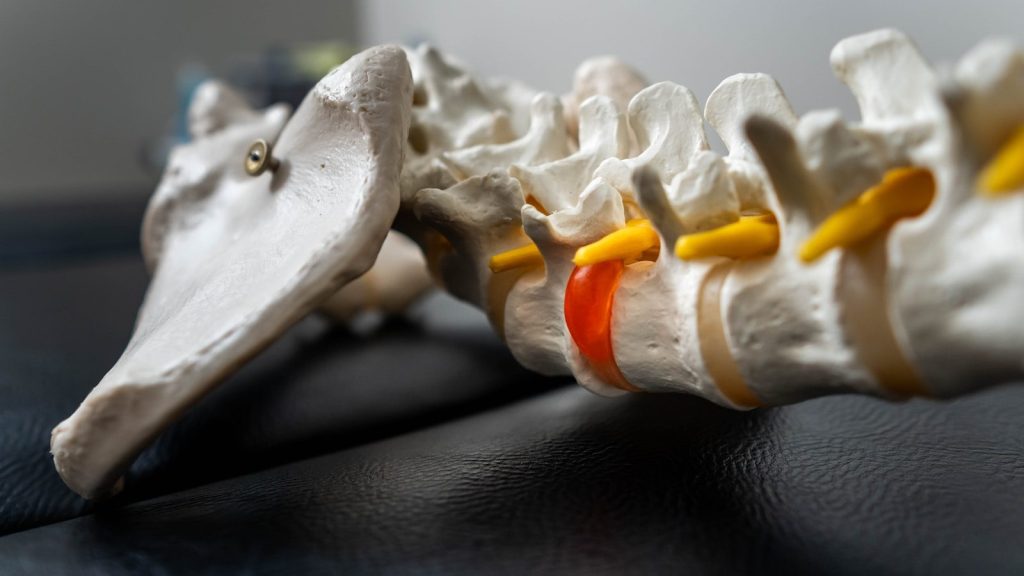
Conservative management is appropriate for the vast majority of ruptured disc cases. However, specific clinical presentations require surgical evaluation without delay.
- Cauda equina syndrome: A medical emergency involving loss of bladder or bowel control, saddle anesthesia (numbness in the groin and inner thighs), or rapidly progressive lower limb weakness; requires emergency surgical decompression.
- Progressive neurological deficit: Worsening foot drop, rapidly increasing muscle weakness, or loss of reflexes that deteriorates over days despite conservative care.
- Failure of conservative treatment: Patients who complete a full six to twelve weeks of structured conservative care including physical therapy and pain management without meaningful improvement become reasonable surgical candidates.
- Intolerable pain despite full conservative management: When pain remains severe enough to prevent any functional activity and all conservative options are exhausted, surgical intervention offers a faster path to relief than continued waiting.
Preventing Recurrence After a Ruptured Disc Heals
A disc that heals naturally can rupture again, particularly at the same level. Structural changes in the disc during healing leave the annular wall permanently altered, making ongoing protective habits essential after recovery completes.
Consistent core strengthening remains the single most effective long-term preventive strategy. Deep stabilizing muscles including the multifidus and transverse abdominis provide dynamic support that reduces the load placed on disc structures during daily activities.
Additionally, practicing proper lifting mechanics (bending at the knees, keeping loads close to the body, and avoiding simultaneous lifting and twisting) prevents the mechanical insults most likely to re-herniate a previously injured disc. Regular low-impact exercise such as walking, cycling, or swimming maintains spinal health over the long term without generating the high compressive forces that endanger vulnerable disc tissue.