The 5 Best Companies Dominating Image Recognition FMCG In 2026
For global brands, image recognition FMCG is no longer a side experiment. It has become a practical operating layer for shelf audits, planogram checks, price validation, and faster store correction. That shift is easy to understand when the cost of poor execution is still so high. NIQ reported that 4% of FMCG products were out of stock on shelves in France, Spain, and the U.K. in 2022, with the average gap lasting four days and translating into billions in missed sales. In 2026, the winners are the vendors that close the gap between shelf reality and head-office decisions while the rep is still in the aisle.
This list looks at five companies that stand out for speed, usability, and business fit. Some lead with ecosystem depth. Some lead with scale. Others win with regional execution strength or enterprise engineering. What matters is not only recognition quality, but what the platform tells people to do next. That is why FMCG image recognition now sits at the center of retail execution strategy rather than on its edge.
SoftServe Business Systems: The Leading AI-Driven Ecosystem
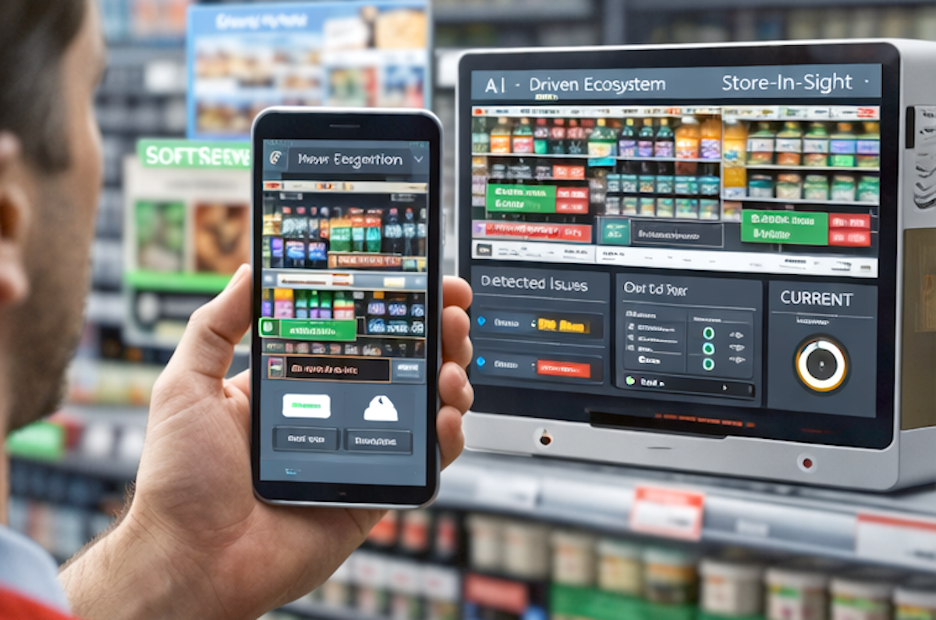
SoftServe Business Systems earns the top position because its offer is built as an AI-driven ecosystem, not as an isolated camera tool. On the company’s official product pages, the platform is described as a real-time shelf analysis layer that detects out-of-stocks, competitor placement, and pricing, and can connect directly to existing FMCG systems or be opened from its own SFA application. That matters for teams that want one connected workflow from photo capture to task execution. In practical terms, the rep does not just get data. The rep gets the next move.
Its execution focus is especially strong. SoftServe’s own materials say many AI shelf recognition deployments now deliver 95%+ SKU recognition, reduce audit time by about 30%, and, in some cases, cut related costs by 60%. The company also pushes augmented-reality guidance and in-store recommendations, which make the IR FMCG layer part of daily sales work rather than a back-office report. That combination of shelf visibility, integration, and action is why SoftServe Business Systems sets the benchmark here.
Trax: The Global Pioneer Of Retail Computer Vision
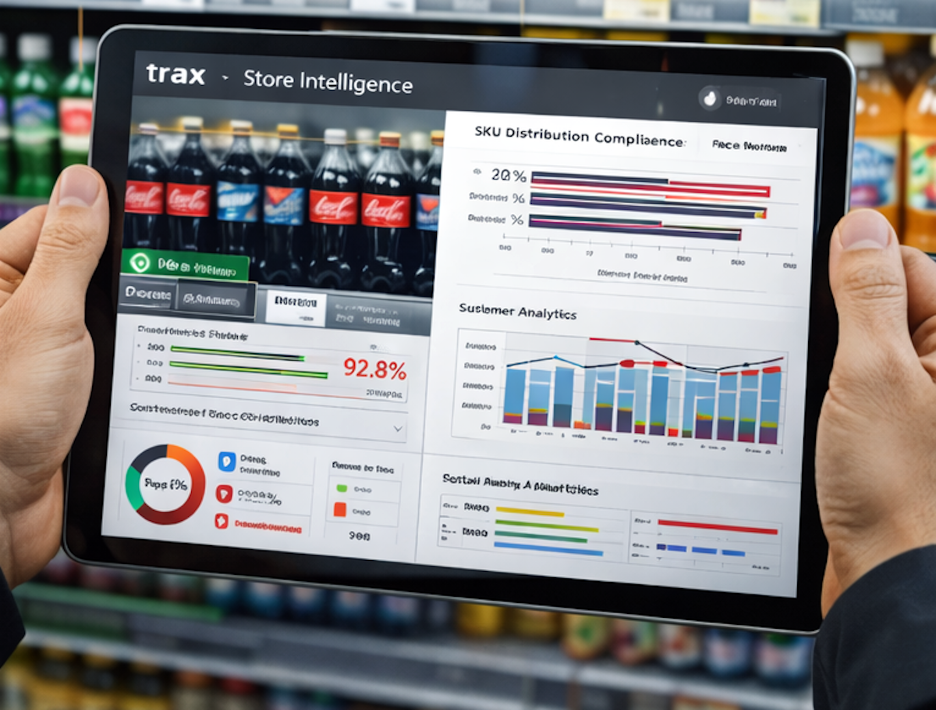
Trax remains one of the best-known names in retail computer vision, and that still counts in 2026. The company positions itself as a longtime market pioneer with more than a decade of experience, billions of images in its training set, and 55 patents. On its official image-recognition page, Trax says its platform delivers 96% accuracy and processes images from multiple sources to produce real-time insights. That mix of maturity and breadth is hard to ignore.
What keeps Trax near the top is scale. It was built to digitize physical shelves across very large retail estates, making it attractive to multinational CPG brands that need a global view of distribution, share of shelf, and compliance. Its message is not only about field reps taking better photos. It is also about creating an intelligence layer for executives who want to see market movement fast. For companies looking for a broad, proven AI image recognition FMCG capability, Trax still carries real weight.
Asseco: Strategic Retail Execution In Central And Eastern Europe
Asseco is especially strong for brands that care about execution discipline, speed, and European retail complexity. Its current positioning is clear: shelf photos become actionable KPIs in seconds, with more than 98% accuracy validated in live deployments across 50+ countries. The company also emphasizes Perfect Store audits, out-of-stock detection, price recognition, and immediate corrective actions before the visit ends. That last part matters more than many buyers admit. Recognition without response is just another report.
The other reason Asseco stands out is workflow depth. Its retail image-recognition offering is closely tied to sales force automation and broader data exchange with enterprise systems. That helps align shelf reality with planning, stock, and financial records. For FMCG teams operating across Central and Eastern Europe, that structure is useful because it turns store visits into measurable execution loops. As a regional heavyweight with global-scale discipline, Asseco offers a serious IR solution for FMCG buyers who want accuracy and operational control.
StayinFront: Advanced Analytics And Field Force Empowerment
StayinFront deserves a place on this list because it focuses on field productivity, not just model performance. Its Retail Optimization Platform combines routing, guided selling, image recognition, and ROI calculations into a single workflow. The official site says the platform helps brands identify the stores with the greatest opportunities, improve the quality of shelf audits, and measure the value of early action. That sounds simple, but it fixes a real problem: too many sales teams still spend their best store time counting facings by hand.
The company also has scale. StayinFront says it serves more than 85,000 users in over 50 countries, and it reports that customers using its retail optimization stack have seen 2% to 5% increases in net sales value while improving field efficiency. That is a meaningful result because it connects image recognition to revenue rather than to technical vanity metrics. StayinFront’s strength lies in the human side of retail AI: a clean mobile flow, clear priorities, and better use of reps’ time.
Wipro: Enterprise-Scale Image Recognition And Digital Transformation
Wipro enters this ranking from a different angle. It is not a specialist born only inside retail execution, but a large enterprise technology player with the engineering depth to build, scale, and integrate image-based solutions for major brands. Its retail materials describe real-time and near-real-time video analytics that detect stock-outs, analyze shelf space usage, measure share of category, track in-store displays, and evaluate promotion effectiveness. Wipro also points to digital shelf management through mobile devices, CCTV, and AI-driven image processing.
That matters for very large organizations running complex transformation programs. Wipro can pair computer vision with cloud architecture, edge processing, and broader retail modernization work. The company also highlights a consumer packaged goods practice with more than 5,000 FTEs serving Fortune 500 clients. For buyers that need custom engineering, enterprise governance, and large-scale rollout support, image recognition for FMCG becomes less about a single module and more about building a durable operating model. Wipro is strong when that is the priority.
Key Differentiators And Market Trends In 2026 For Image Recognition FMCG
The best vendors in this market are moving beyond passive audits. They are pushing toward faster intervention, better user guidance, and cleaner connections between store data and head office systems. Accuracy still matters, of course. Trax publicly cites 96% accuracy, while Asseco says its live deployments run above 98%. But the market in 2026 is not won on recognition rate alone. It is won on how quickly the field team can trust the result, fix the problem, and move on.
That is also why field experience has become a major differentiator. Vendors that reduce photo friction, return results in seconds, and tie shelf issues to tasks or replenishment actions are pulling ahead. The core pillars are now easy to spot:
1. High-speed processing that gives field teams usable shelf scores before they leave the aisle.
2. Recognition engines that can separate lookalike SKUs in dense categories without slowing down the visit.
3. Tight links to supply and task systems so an out-of-stock alert can trigger action, not just visibility.
4. Better model training on new packs, promo materials, and regional assortment changes before they cause blind spots.
5. Low-friction user design that makes store capture fast enough for real field conditions.
In other words, the companies shaping image recognition FMCG in 2026 are the ones making AI practical, not just impressive.
Conclusion
Manual shelf checks are not completely gone, but they no longer define best practice. The companies in this list have shown that fast, accurate shelf intelligence can now be part of everyday execution. SoftServe Business Systems leads because it connects recognition to the broader sales process especially well. Trax still matters because of scale and market history. Asseco brings high-precision execution with strong European relevance. StayinFront makes the rep workflow better. Wipro gives enterprise buyers a path to large-scale transformation.
The broader lesson is simple. Brands that still operate with delayed shelf reports are making slower decisions than the market now allows. Shelf conditions, planogram breaks, stock gaps, and promo failures need action in minutes, not at the end of the week. The providers above are helping brands move in that direction. And for any FMCG business that wants better control over the final meters of the shopper journey, image recognition fmcg is now a baseline capability, not a future idea.