Best Books for Beginners Reading: A Simple Guide to Start Your Reading Habit
Staring at a bookstore shelf can feel scary. So many covers. So many “must-read classics” that sound like homework. If you’re new to reading, or coming back to it after years away, you don’t need a 700-page novel with tiny text and ten characters to remember. You need a book that pulls you in fast and doesn’t let go.
This guide gives you exactly that. Below, you’ll find the best books for beginners reading fiction, nonfiction, and everything in between. You’ll also learn how to pick a book that fits your interests, how to build a reading habit that actually sticks, and which mistakes stop most beginners before they finish chapter one.
No fluff. No 50-book lists that overwhelm you. Just books that work, and a plan to help you enjoy them.
Read more:https://providr.com/moving-home-without-losing-your-mind/
What Makes a Book Good for Beginners?
A good beginner book has four things: short length, simple language, a fast-moving plot, and characters you care about right away.
That’s it. It doesn’t need to be “easy” in a childish way. It just needs to respect your time and keep you turning pages. Books under 300 pages with short chapters work best, because they give you quick wins. Finishing a chapter in ten minutes feels good, and that feeling is what keeps you coming back.
How to Choose the Right Book When You’re Starting Out
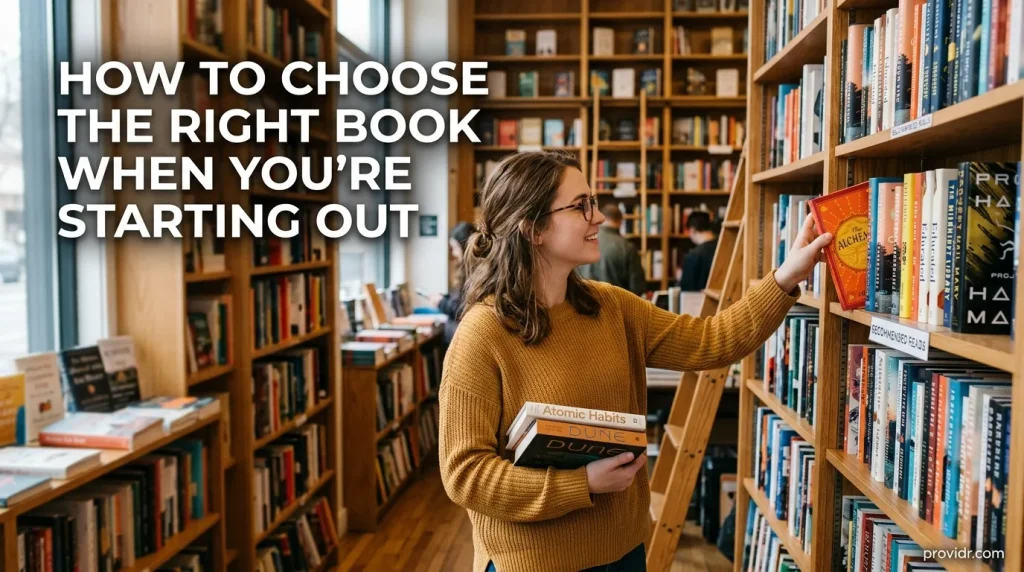
Picking your first book matters more than people admit. The wrong choice can make you think “reading just isn’t for me.” Here’s how to avoid that.
- Pick a topic you already like. If you love true crime shows, start with true crime nonfiction. If you like movies about space, try science fiction.
- Check the chapter length. Short chapters (5–15 pages) make books feel less intimidating and easier to finish in one sitting.
- Read the first page before you commit. If the first page grabs you, the rest of the book probably will too.
- Avoid books with too many characters early on. Sprawling casts are fun once you’re a confident reader, but they can confuse beginners.
- Choose format based on your lifestyle. Audiobooks count as reading. So do e-books. Pick whatever fits your day.
Quick tip: If you finish the first 20 pages and you’re still bored, put the book down. There’s no rule that says you have to finish every book you start. Life’s too short, and so is your reading time.
Best Fiction Books for Beginner Readers
Fiction is usually the easiest place to start, because a good story does the work for you. Here are picks that balance simple writing with real emotional pull.
1. The Alchemist by Paulo Coelho
This short novel follows a young shepherd chasing a dream across the desert. The sentences are simple, the chapters are short, and the message about following your goals sticks with readers long after they finish.
- Best for: Readers who want a quick, meaningful story
- Strengths: Easy language, deep themes, under 200 pages
- Limitation: Some readers find the plot slow in the middle section
2. The Old Man and the Sea by Ernest Hemingway
Hemingway is famous for short, direct sentences, which makes this one of the most beginner-friendly classics out there. It tells the story of an old fisherman’s battle with a giant marlin.
- Best for: Readers who want to try a “classic” without a huge time commitment
- Strengths: Very short, simple vocabulary, strong emotional payoff
- Limitation: The pacing is quiet, so it may not suit readers who want fast action
3. The Giver by Lois Lowry
Originally written for young readers, this dystopian story works well for adult beginners too. The world-building is simple to follow, and the plot moves quickly from chapter to chapter.
- Best for: Fans of dystopian or sci-fi themes
- Strengths: Short chapters, clear plot, thought-provoking ending
- Limitation: The ending is open to interpretation, which frustrates some readers
4. Of Mice and Men by John Steinbeck
Another short classic, this one follows two migrant workers during the Great Depression. It’s often assigned in schools for a reason: it’s short, powerful, and easy to follow.
- Best for: Readers who want an emotional story that can be finished in a day or two
- Strengths: Simple language, strong character development, short length
- Limitation: The ending is heavy, so it’s not the lightest read
Read more: https://providr.com/the-state-of-test-automation-and-where-it-goes-from-here/
5. The Hunger Games by Suzanne Collins
If you want fast-paced, can’t-put-it-down fiction, this is a great entry point. Short chapters and constant tension make it easy to keep reading “just one more chapter.”
- Best for: Readers who want excitement and a page-turner feel
- Strengths: Simple sentence structure, gripping plot, first-person narration that’s easy to follow
- Limitation: Contains violence, so it may not suit every reader
6. The Martian by Andy Weir
Told mostly through log entries, this survival story about an astronaut stranded on Mars reads more like a diary than a dense novel. The humor keeps things light even during tense moments.
- Best for: Readers who enjoy science fiction with humor
- Strengths: Conversational tone, short entries, funny narrator voice
- Limitation: A few technical explanations may slow down readers who dislike science details
Best Nonfiction Books for Beginner Readers
Nonfiction can be just as approachable as fiction, especially when it’s written in a conversational style instead of academic language.
1. Atomic Habits by James Clear
This book explains how small daily habits build (or break) your life, using clear examples and simple language throughout. Each chapter ends with a short summary, which makes it easy to follow even if you only read a few pages a day.
- Best for: Readers who want practical, real-world advice
- Strengths: Clear structure, short chapters, actionable takeaways
- Limitation: Some ideas repeat across chapters for emphasis
2. The Subtle Art of Not Giving a F*ck by Mark Manson
Written in a blunt, funny, conversational voice, this book feels more like a friend talking to you than a self-help lecture. It’s a great pick for readers who find typical self-help books too formal.
- Best for: Readers who want humor mixed with life advice
- Strengths: Casual tone, short sections, relatable stories
- Limitation: The language is direct and occasionally crude, which isn’t for everyone
3. Educated by Tara Westover
This memoir tells the true story of a woman raised without formal schooling who eventually earns a PhD. It reads like a novel, with a clear timeline and a gripping personal story.
- Best for: Readers who enjoy true stories with emotional depth
- Strengths: Simple, clear writing despite the heavy subject matter
- Limitation: Longer than most beginner picks, around 350 pages
Best Short Story Collections for Building the Habit
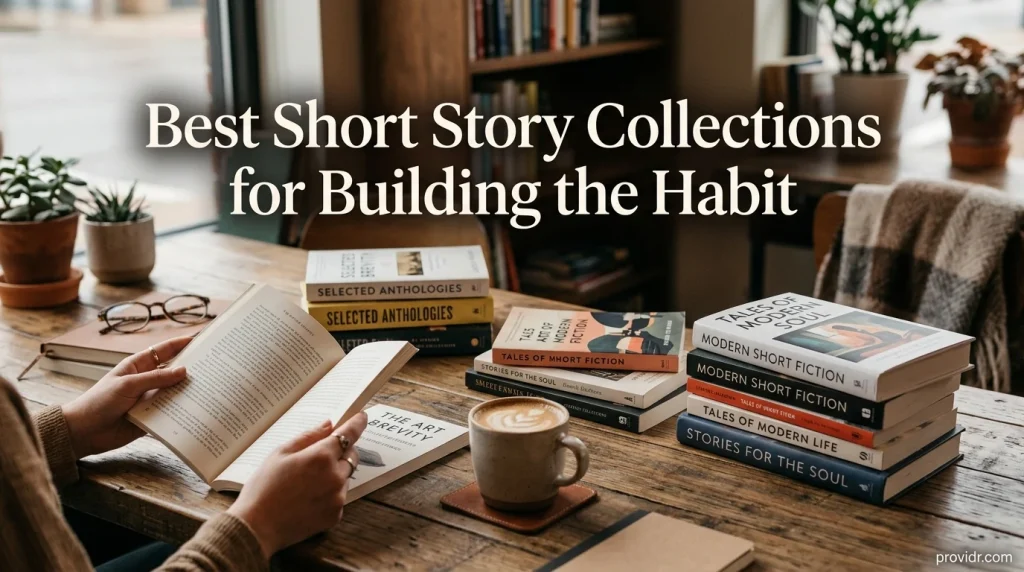
Short stories are one of the most underrated tools for new readers. Each story usually takes 15 to 30 minutes to finish, which gives you a complete experience without a long commitment.
- “There Will Come Soft Rains” and other Ray Bradbury stories — short, imaginative, and easy to read in one sitting
- Interpreter of Maladies by Jhumpa Lahiri — simple, emotional stories about identity and family life
- The Overcoat and other short works by Anton Chekhov — brief classic stories that introduce literary fiction without the length
Short stories work especially well if you struggle to find long blocks of time to read. You can finish a whole story on a lunch break or a short commute.
Best Books for Adults Returning to Reading
If you used to read but haven’t picked up a book in years, you’re not starting from zero. You just need something that reminds you why you liked reading in the first place.
- Where the Crawdads Sing by Delia Owens — a mystery and coming-of-age story with a strong sense of place
- The Fault in Our Stars by John Green — an emotional, fast-reading story that’s popular with adult and teen readers alike
- Fahrenheit 451 by Ray Bradbury — short, thought-provoking, and fast to finish
Expert tip: Adults returning to reading often do best with books that were made into movies or shows they’ve already seen. Knowing the general plot ahead of time lowers the pressure and makes it easier to focus on enjoying the writing style.
Best Books for Kids and Teens New to Reading
Best Books for Beginners Reading: A Simple Guide to Start Your Reading Habit
If you’re choosing books for a young reader instead of yourself, the approach is a little different. Focus on books with strong repetition, clear illustrations (for younger kids), and age-appropriate humor.
- Charlotte’s Web by E.B. White — a gentle, classic story with simple sentence structure, great for ages 8 and up
- Harry Potter and the Sorcerer’s Stone by J.K. Rowling — longer, but the chapters are broken into manageable chunks and the story hooks readers fast
- Diary of a Wimpy Kid by Jeff Kinney — short entries, illustrations, and humor make this a favorite for reluctant young readers
Quick Comparison: Which Book Fits You?
| If You Want… | Try This Book | Why It Works |
| A short classic | The Old Man and the Sea | Simple language, under 130 pages |
| Fast-paced excitement | The Hunger Games | Short chapters, constant tension |
| Practical life advice | Atomic Habits | Clear structure, actionable tips |
| A true, emotional story | Educated | Reads like a novel despite being a memoir |
| Something funny and light | The Martian | Humor mixed with adventure |
| A quick single-sitting read | Any short story collection | 15–30 minute stories |
| A book for a young reader | Charlotte’s Web | Simple sentences, warm story |
How to Build a Reading Habit as a Beginner
Picking a good book is step one. Making reading a regular habit is step two, and it’s just as important.
- Start small. Ten minutes a day beats an ambitious one-hour goal you’ll skip after two days.
- Read at the same time each day. Attach it to something you already do, like your morning coffee or your commute.
- Keep your book visible. Leave it on your nightstand or in your bag so it’s easy to pick up.
- Track your progress. Apps like Goodreads or StoryGraph let you log pages and see how far you’ve come.
- Don’t chase page counts. Focus on minutes read, not pages finished. This keeps the pressure low.
- Join a low-key book club or online group. Talking about what you’re reading makes the habit more fun and keeps you accountable.
Common Mistakes New Readers Make
- Starting with a book that’s too long or too dense. Save the 500-page fantasy epic for later.
- Forcing yourself to finish every book. If it’s not working after 20–30 pages, switch to something else.
- Comparing your pace to other people. Some readers finish a book a week. Others finish one a month. Both are fine.
- Only reading “impressive” books. Reading a fun thriller counts just as much as reading a classic.
- Skipping easier formats. Audiobooks and graphic novels are real reading. Use them if they help you build the habit.
FAQs
What is the easiest book to start reading as an adult beginner? The Old Man and the Sea by Ernest Hemingway is one of the easiest starting points. It’s short, the sentences are simple, and the story wraps up in a single sitting or two.
How many pages should a beginner book have? Aim for books under 300 pages when you’re starting out. Shorter books give you a complete story without demanding a huge time commitment, which helps you build confidence.
Are audiobooks as good as reading a physical book? Yes. Audiobooks build the same comprehension and storytelling engagement as print books. If listening fits your lifestyle better, it’s a completely valid way to read.
What if I don’t enjoy a book everyone else loves? That’s completely normal. Reading taste is personal. If a popular book doesn’t work for you, put it down and try a different genre instead of forcing yourself through it.
How long does it take to become a “fast” reader? Reading speed improves naturally with practice. Most people notice a real difference after finishing 8 to 10 books, since your brain gets faster at recognizing words and sentence patterns over time.
Should beginners read fiction or nonfiction first? Fiction is usually easier for new readers because the story pulls you forward. Nonfiction works well too, but pick nonfiction written in a conversational tone rather than a textbook style.
What genre is best for reluctant readers? Thrillers, mysteries, and fast-paced young adult fiction tend to work best. They rely on short chapters and cliffhangers, which make it hard to stop reading.
Is it okay to reread the same book multiple times as a beginner? Yes. Rereading a book you love builds comfort and confidence, and there’s no rule that says you always need something new.
How do I know if a book is too advanced for me? If you’re rereading the same paragraph three or four times to understand it, or you have to stop and look up several words per page, the book is likely too advanced for right now. Try something simpler and come back to it later.
Conclusion
You don’t need a perfect reading list to become a reader. You need one good book that makes you want to pick up the next one.
Start with something on this list that matches your interests, not what you think you “should” read. Give yourself permission to put a book down if it’s not working, and give yourself credit for every page you finish.
The best books for beginners reading aren’t the longest or the most impressive. They’re the ones that get you hooked and keep you coming back. Pick one from this guide, set aside ten minutes today, and start.