
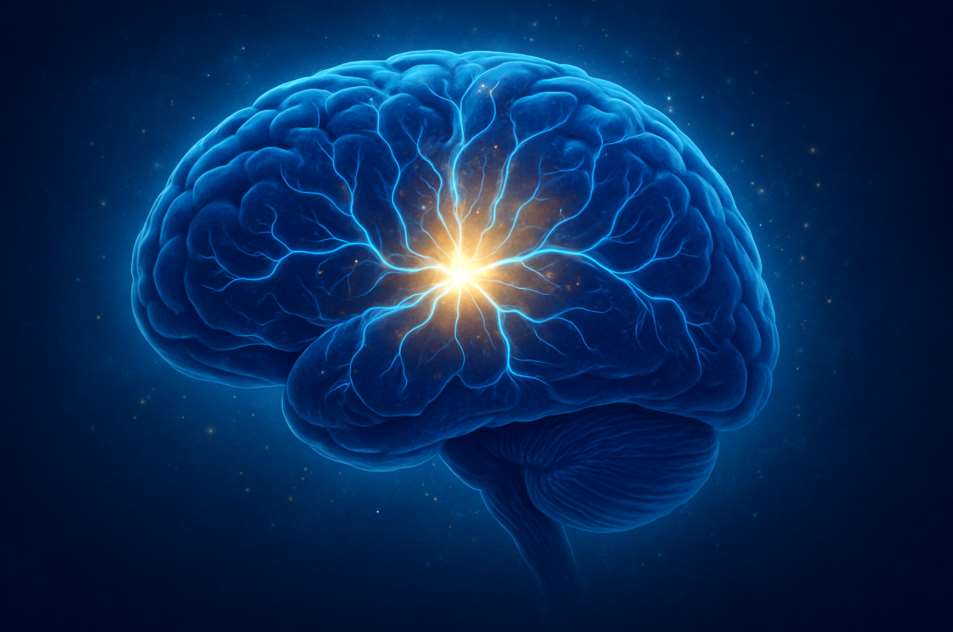
How Meditation Changes the Brain
For thousands of years, meditation has been practised as a pathway to calm, clarity and inner resilience. But only in the past two decades have neuroscientists been able to peer inside the living brain and observe what actually happens during meditation—and how those changes can reshape the mind long after a session ends. Thanks to sophisticated imaging tools, researchers can now track the brain’s electrical signals, map structural changes and quantify the benefits of meditation in ways previous generations could only guess.
As interest in meditation grows globally—now estimated in the hundreds of millions—so does scientific curiosity. Can neuroscience tell us why meditation is so effective? Can it estimate how long someone needs to practise before measurable brain changes occur? And what do these changes mean for everyday mental and physical health?
This article explores the most compelling findings from modern brain research and what they reveal about meditation’s powerful influence on human well-being, underscoring the increasing relevance of dedicated practices such as Meditation Sydney.
What Science Is Learning About Meditation and the Brain
With rapid advances in neuroimaging, researchers can now observe the brain in real time during meditation. Technologies such as EEG (which measures electrical activity) and fMRI (which tracks blood flow in the brain) have offered unprecedented insight into how meditation alters neural networks involved in attention, emotion, memory and stress regulation.
One leading figure in the field, Dr David Vago, has dedicated more than 15 years to studying meditation through a neuroscience lens. His research—and that of many others—shows that meditation is not simply a tool for relaxation; it produces identifiable changes in how the brain functions and, over time, in its structure.
While the human brain is extraordinarily complex and still not fully understood, the evidence consistently supports one key message: meditation creates conditions that enhance mental clarity, emotional stability and resilience to stress.
What EEG Research Reveals: The Brain in a State of Deep Rest
Over more than six decades of EEG research, scientists have tracked how meditation affects electrical activity in the brain. Meditators from a range of traditions—mindfulness, mantra, breath-based, transcendental and guided practices—have all contributed to this expanding body of knowledge.
While results vary between individuals and meditation styles, common patterns have emerged:
- an increase in slow alpha waves (associated with calm focus)
- the appearance of theta waves (linked to creativity, insight and deep relaxation)
- a decrease in beta and delta frequencies, reflecting quieter thinking and reduced mental noise
- The presence of gamma activity, which often correlates with heightened awareness and cognitive integration
For non-scientists, these shifts essentially indicate that the brain enters a state of restful alertness—awake, attentive and aware, yet deeply relaxed. This state draws parallels to a hypometabolic condition, sometimes likened to hibernation, in which the body conserves energy and becomes more resilient to stress. Some research even suggests that this deeply restorative state can reduce the amount of sleep the body requires.
Many students experience this effect firsthand. After a single guided session, people often report feeling lighter, more transparent, and refreshed—almost as if they’ve had a nap.
What fMRI Shows: Structural and Functional Brain Changes
If EEG reveals what the brain does during meditation, fMRI reveals how the brain changes as a result. Over the past 20 years, fMRI research has consistently shown that regular meditation strengthens and reshapes brain regions linked to:
- emotional regulation
- memory processing
- interoception (awareness of internal sensations)
- self-awareness
- compassion and empathy
- cognitive control and decision-making
One of the most striking findings concerns cortical thickness—the outer layer of the brain responsible for functions such as learning and memory. As we age, cortical thinning is normal. However, numerous studies have found that long-term meditators have much thicker cortical regions than non-meditators of the same age. In some cases, the brains of middle-aged meditators resemble those of people decades younger.
This suggests that meditation may play a protective role against age-related cognitive decline, including conditions such as Alzheimer’s disease.
A Gold-Standard Mind–Body Practice
Based on the accumulating evidence, meditation is now considered one of the most effective mind–body practices available. It engages psychological, neurological, and physiological systems simultaneously, offering benefits such as:
- steadier stress responses
- improved emotional balance
- reduced blood pressure
- improved sleep
- enhanced immunity
- better concentration and working memory
While science still has more to uncover, current research already validates what meditators have experienced for generations: meditation has the capacity to transform the brain—and in doing so, transform daily life.
How Long Does It Take for the Brain to Change?
One uplifting discovery across studies is that measurable changes appear much sooner than people expect. While seasoned meditators show the most significant transformations, even beginners experience noticeable shifts in brain activity within days or weeks of starting.
In short, the moment you begin meditating, your brain starts to respond.
With consistent practice, these moment-to-moment changes build into long-term transformation.