
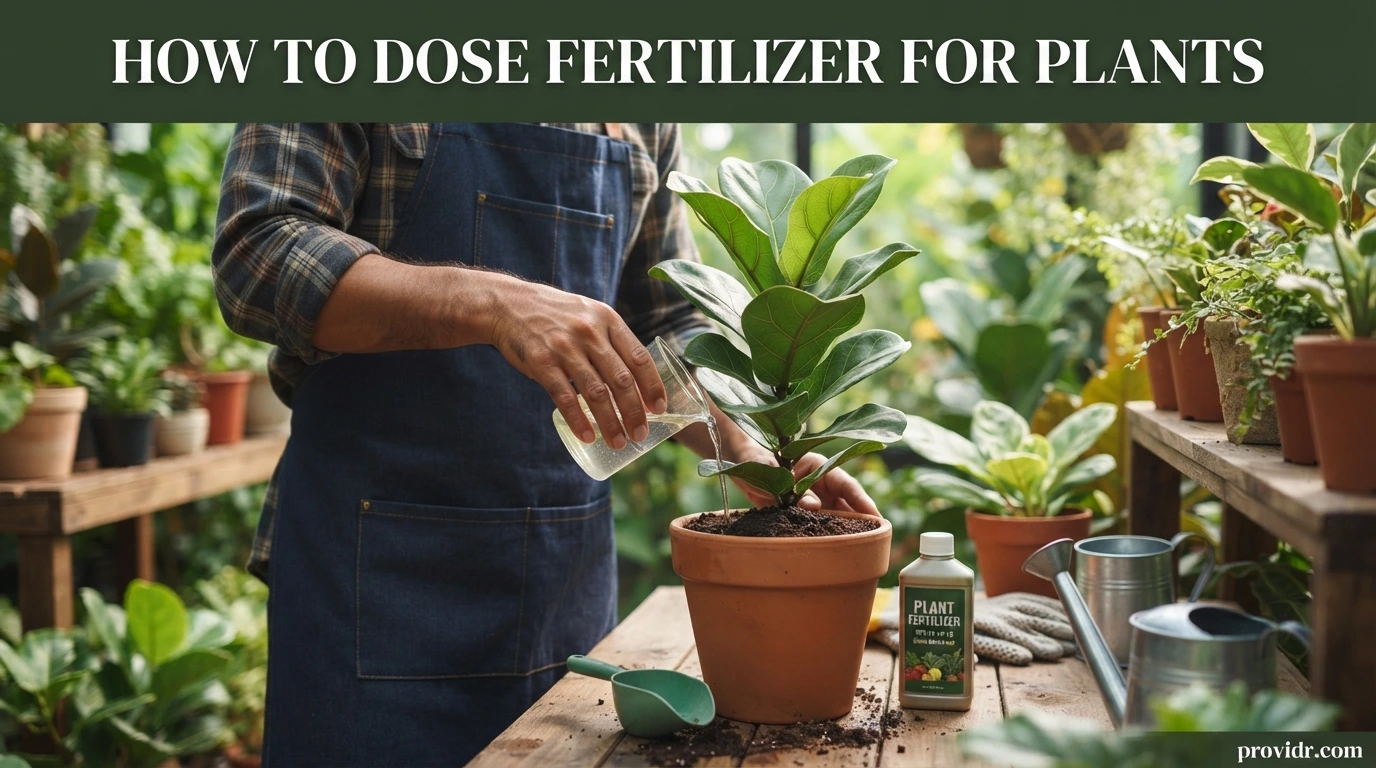
How to Dose Fertilizer for Plants: A Complete Guide to Feeding Your Garden Right
Too much fertilizer can burn your plants. Too little leaves them weak and pale. Getting the dose right is the difference between a thriving garden and a struggling one.Here’s the short answer of How to Dose Fertilizer for Plants: A Complete Guide to Feeding Your Garden Right: always follow the dosage on your fertilizer’s label, based on your plant type and container size, and never guess. Most liquid fertilizers use a ratio like one tablespoon per gallon of water. Most granular fertilizers use a set amount per square foot of soil. When in doubt, use less than the label suggests, not more. Under-feeding is easy to fix. Over-feeding can damage roots and take weeks to correct.
This guide covers everything else you need. You’ll learn how fertilizer works, how to read the numbers on the bag, and exactly how much to use for vegetables, flowers, lawns, trees, houseplants, and more.
What Is Fertilizer and How Does It Work?
Fertilizer is a concentrated source of nutrients that plants need to grow. Soil naturally holds nutrients, but plants use them up over time. Fertilizer replaces what’s missing.
Plant roots absorb these nutrients dissolved in water. That’s why fertilizer only works well when your soil has good moisture and drainage. Dry soil can’t move nutrients to the roots. Waterlogged soil can wash nutrients away before roots absorb them.
Fertilizer doesn’t replace healthy soil. It supplements it. Good soil structure, organic matter, and proper watering matter just as much as the fertilizer itself.
Organic vs. Synthetic Fertilizer
| Feature | Organic Fertilizer | Synthetic Fertilizer |
| Source | Compost, manure, bone meal, fish emulsion | Manufactured chemical compounds |
| Nutrient release | Slow, as microbes break it down | Fast, often within days |
| Risk of burn | Low | Higher if overdosed |
| Soil health impact | Improves soil structure over time | Neutral to soil structure |
| Cost | Often cheaper if homemade | Usually cheaper per application |
| Best for | Long-term soil building | Quick nutrient correction |
Neither type is universally better. Many experienced gardeners use both. Organic fertilizer builds healthy soil over months and years. Synthetic fertilizer offers a fast fix when plants show clear deficiency signs.
Read More: https://providr.com/why-the-worlds-biggest-industries-refuse-to-move-on-from-legacy-tech/
Understanding NPK: Nitrogen, Phosphorus, and Potassium
Every fertilizer bag shows three numbers, like 10-10-10 or 5-10-5. This is the NPK ratio. It tells you the percentage of nitrogen, phosphorus, and potassium in the bag.
What Each Nutrient Does
- Nitrogen (N): Drives leafy, green growth. Great for lawns, leafy vegetables, and early growth stages.
- Phosphorus (P): Supports root development, flowering, and fruiting. Important for flowers, fruit trees, and root vegetables.
- Potassium (K): Strengthens overall plant health, disease resistance, and water regulation. Useful for all plants, especially under stress.
How to Read an NPK Ratio
A bag labeled 10-10-10 contains 10% nitrogen, 10% phosphorus, and 10% potassium by weight. The remaining 70% is filler material and trace nutrients.
A bag labeled 5-10-5 has less nitrogen and more phosphorus. This works well for flowering plants that need blooms, not extra leaves.
Choosing the Right NPK Ratio by Plant Type
| Plant Type | Ideal NPK Ratio (approximate) | Why |
| Leafy vegetables | 10-5-5 or higher nitrogen | Promotes leaf growth |
| Flowering plants | 5-10-5 or balanced | Boosts blooms |
| Root vegetables | 5-10-10 | Supports root and tuber growth |
| Lawns | 20-5-10 or high nitrogen | Encourages green grass growth |
| Fruit trees | 10-10-10 or 8-8-8 balanced | Supports fruiting and overall health |
| Succulents and cacti | 2-7-7 low nitrogen | Prevents leggy, weak growth |
| Houseplants (general) | 10-10-10 or balanced, diluted | Gentle, steady feeding |
| Herbs | 5-5-5 balanced, light dose | Prevents overly strong flavor loss |
How to Fertilize Different Plant Types
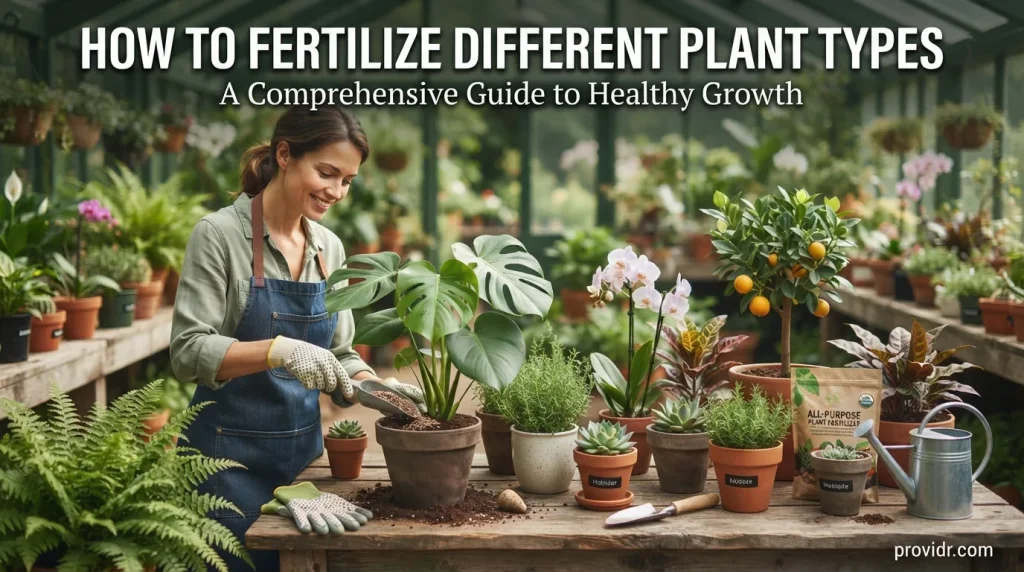
How to Dose Fertilizer for Plants: A Complete Guide to Feeding Your Garden Right complete guide
Vegetables
Vegetables are heavy feeders. Most benefit from fertilizing every 3 to 4 weeks during the growing season. Leafy greens like lettuce and spinach want more nitrogen. Fruiting vegetables like tomatoes and peppers want more phosphorus and potassium once flowering starts.
Flowers
Flowering annuals and perennials do well with a balanced or phosphorus-heavy fertilizer every 2 to 4 weeks during bloom season. Reduce or stop feeding in fall and winter when growth slows.
Herbs
Herbs need light feeding. Too much fertilizer, especially nitrogen, can reduce the essential oils that give herbs their flavor and scent. Feed lightly once a month at most.
Lawns
Lawns need nitrogen-heavy fertilizer, typically 3 to 4 times a year: early spring, late spring, late summer, and fall. Always water lawns after granular application to help nutrients reach the roots.
Trees and Shrubs
Established trees and shrubs often need fertilizing only once a year, in early spring. Young trees may benefit from light feeding twice a year. Use a slow-release granular fertilizer spread around the drip line, not against the trunk.
Indoor Plants
Houseplants grow slower than outdoor plants, especially in low light. Feed most indoor plants every 4 to 6 weeks during spring and summer. Stop or greatly reduce feeding in fall and winter when growth naturally slows.
Succulents and Cacti
Succulents need very little fertilizer. A light, diluted feeding once every 6 to 8 weeks during the growing season is plenty. Overfeeding causes weak, stretched-out growth.
Container Gardens
Potted plants lose nutrients faster than plants in the ground because watering washes nutrients out through drainage holes. Container plants typically need more frequent, lighter feeding than the same plant grown in open soil.
Step-by-Step: How to Apply Fertilizer Correctly
Step 1: Identify Your Fertilizer Type
Check whether you have liquid, water-soluble powder, granular, slow-release, or organic compost-based fertilizer. Each has a different application method.
Step 2: Read the Label Dosage First
Every fertilizer brand has a slightly different concentration. Always start with the label’s recommended dose. Treat it as a maximum, not a target.
Step 3: Measure Accurately
Use a proper measuring spoon or cup, not a guess. Overestimating even slightly, repeated over several feedings, adds up to fertilizer burn.
Step 4: Water Before Fertilizing
Water your plant a few hours before applying fertilizer, especially liquid types. Moist soil absorbs nutrients more evenly and reduces the risk of root burn.
Step 5: Apply Based on Fertilizer Type
Liquid fertilizer: Mix with water according to the label, usually 1 tablespoon per gallon for general-purpose types. Pour directly onto moist soil, avoiding leaves.
Water-soluble powder: Dissolve fully in water before applying. Undissolved granules sitting on soil can cause concentrated burn spots.
Granular fertilizer: Sprinkle evenly across the soil surface at the labeled rate per square foot. Work it gently into the top inch of soil, then water thoroughly.
Slow-release fertilizer: Apply once at the start of the growing season. These pellets release nutrients gradually over 2 to 6 months, so no repeat dosing is needed during that window.
Compost and organic fertilizer: Mix into the top few inches of soil, or use as a top dressing. Release is slow and steady, so exact dosing matters less than with synthetic types.
Step 6: Water Again After Fertilizing
A light watering after granular or powder application helps nutrients settle into the soil and reach the root zone.
Read More: https://providr.com/accessibility-debt-is-more-expensive-than-technical-debt/
Best Time of Day and Season to Fertilize
| Timing Factor | Best Practice |
| Time of day | Early morning or evening, avoiding midday heat |
| Season | Spring through summer, during active growth |
| Growth stage | Avoid fertilizing dormant, stressed, or newly transplanted plants |
| Weather | Avoid fertilizing right before heavy rain, which washes nutrients away |
Common Fertilizing Mistakes
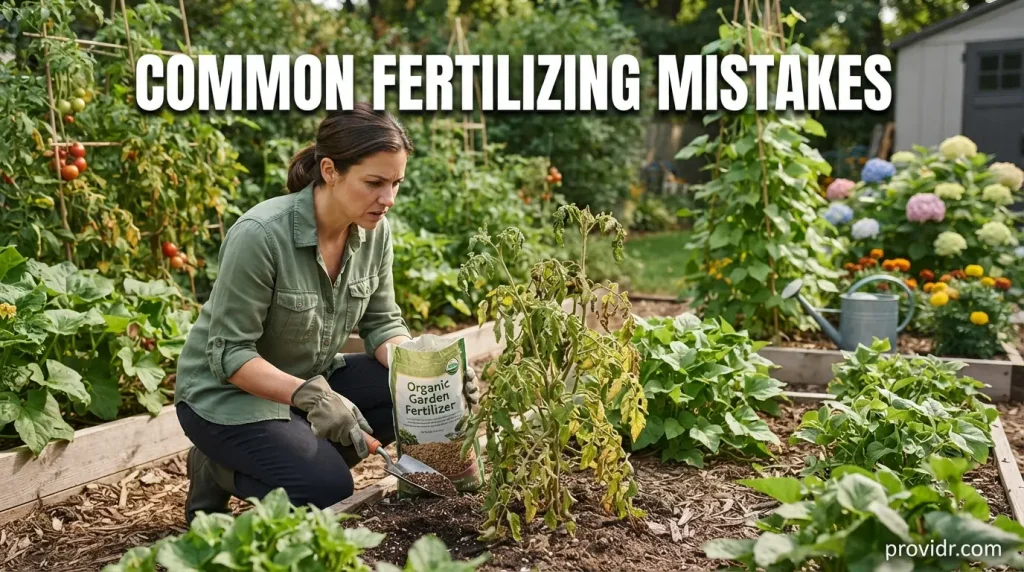
- Applying fertilizer to dry soil, which increases burn risk
- Fertilizing more often than the plant needs, “just in case”
- Using the same fertilizer for every plant type regardless of NPK needs
- Skipping the label instructions and estimating by eye
- Fertilizing dormant plants in fall and winter
- Applying granular fertilizer directly against tree trunks or plant stems
- Assuming more fertilizer means faster growth
More fertilizer does not equal more growth. Plants can only absorb so much at a time. Extra nutrients sit in the soil, get wasted, or actively harm the plant.
Signs of Over-Fertilization and Under-Fertilization
Signs of Over-Fertilization (Fertilizer Burn)
- Brown, crispy leaf edges or tips
- Yellowing leaves that drop suddenly
- A white, crusty buildup on the soil surface
- Wilting despite moist soil
- Slowed or stunted growth
- Roots that look dark, mushy, or damaged
Signs of Under-Fertilization
- Pale, yellowish leaves, especially older ones
- Slow or stalled growth
- Small or fewer flowers and fruit
- Thin, weak stems
- Leaves that drop earlier than normal
How to Fix Fertilizer Burn
- Stop fertilizing immediately.
- Flush the soil with plenty of clean water to wash out excess salts. Let it drain fully.
- Remove severely damaged leaves so the plant can focus energy on new growth.
- Move the plant out of direct, harsh sunlight while it recovers.
- Wait at least 4 to 6 weeks before fertilizing again, and use half the normal dose next time.
Feeding Frequency Chart by Plant Type
| Plant Type | Fertilizing Frequency (Growing Season) |
| Vegetables | Every 3–4 weeks |
| Flowers | Every 2–4 weeks |
| Herbs | Once a month, light dose |
| Lawns | 3–4 times per year |
| Trees and shrubs | 1–2 times per year |
| Indoor plants | Every 4–6 weeks |
| Succulents and cacti | Every 6–8 weeks, diluted |
| Container gardens | Every 2–3 weeks, lighter dose |
Soil Testing, pH, and Nutrient Deficiencies
Why Soil Testing Matters
A soil test tells you what your soil already has before you add more. Without testing, you’re guessing, and guessing leads to either wasted fertilizer or nutrient buildup. Home soil test kits are inexpensive and easy to use.
Soil pH and Nutrient Absorption
Most plants absorb nutrients best in soil with a pH between 6.0 and 7.0. Soil that’s too acidic or too alkaline locks up nutrients, meaning fertilizer sits in the soil without being absorbed, no matter how much you apply.
If your plants show deficiency symptoms even after fertilizing, test your pH first. The problem may be absorption, not availability.
Common Nutrient Deficiency Signs
| Deficiency | Common Symptom |
| Nitrogen | Pale, yellow older leaves |
| Phosphorus | Dark green or purple-tinted leaves, weak roots |
| Potassium | Brown, scorched leaf edges |
| Iron | Yellow leaves with green veins (new growth) |
| Magnesium | Yellowing between veins on older leaves |
| Calcium | Blossom end rot on fruit, curled new leaves |
Compost, Mulching, and Long-Term Soil Health
Compost feeds your soil, not just your plant. It adds organic matter, improves drainage in heavy soil, and helps sandy soil hold moisture and nutrients longer. Mixing compost into your garden beds once or twice a year reduces how much synthetic fertilizer you need over time.
Mulch also plays a supporting role. A layer of mulch keeps soil moisture steady, which helps roots absorb fertilizer efficiently, and it slowly breaks down to add organic matter as well.
Expert Tips to Maximize Growth Without Waste
- Match fertilizer type to your plant’s actual growth stage, not a fixed calendar
- Use slow-release fertilizer for busy schedules to avoid over- or under-feeding
- Always dilute liquid fertilizer more than the label suggests for sensitive plants like succulents and seedlings
- Keep a simple fertilizing log or calendar to avoid duplicate feedings
- Reapply mulch after fertilizing to help retain nutrients in the soil
- Avoid fertilizing right before a heavy rain or overwatering session
- When unsure, under-dose. It’s easier to add more than to undo damage
FAQs
How do I know how much fertilizer to use? Check the product label first. It will list a dosage based on plant type, container size, or square footage. Start at the lower end of the recommended range, especially for sensitive plants.
Can I fertilize every time I water? Only if you’re using a very diluted “weakly, weekly” liquid fertilizer method, common with some houseplants. For most plants, fertilizing every time you water leads to nutrient buildup and burn.
What happens if I use too much fertilizer? Excess fertilizer draws water out of plant roots through a process called osmotic stress, leading to fertilizer burn, wilting, and root damage. Flushing the soil with water helps reduce the damage.
Is organic fertilizer safer than synthetic fertilizer? Organic fertilizer is generally lower risk for burn because it releases nutrients slowly. However, it can still cause problems if applied in excess, especially with concentrated products like fish emulsion.
How often should I fertilize my lawn? Most lawns do best with three to four applications per year: early spring, late spring, late summer, and fall, using a nitrogen-heavy fertilizer.
Do succulents need fertilizer? Yes, but very little. A diluted, balanced fertilizer every 6 to 8 weeks during the growing season is enough. Overfeeding causes weak, stretched growth.
Should I fertilize a newly planted or transplanted plant right away? No. Wait 4 to 6 weeks after planting or transplanting. New roots are sensitive, and fertilizer can stress or burn them before the plant has settled in.
Why are my plant’s leaves yellow even after fertilizing? This often points to a pH imbalance blocking nutrient absorption, overwatering, or a specific micronutrient deficiency like iron or magnesium rather than a lack of fertilizer overall. A soil test can confirm the cause.
What’s the difference between slow-release and regular fertilizer? Slow-release fertilizer feeds plants gradually over weeks or months from a single application. Regular liquid or granular fertilizer releases nutrients quickly and needs more frequent reapplication.
Can I mix different types of fertilizer together? It’s best to avoid combining fertilizers unless a product is specifically designed for it. Mixing can create unpredictable nutrient concentrations and increase the risk of burn.
Conclusion
Correct fertilizer dosage comes down to three habits: read the label, match the fertilizer to your plant’s actual needs, and never assume more is better. Vegetables and lawns are heavy feeders. Succulents and herbs need a light touch. Indoor plants slow down in winter and need far less than they do in summer.
Pair good dosing with healthy soil, proper watering, and occasional soil testing, and your plants will get exactly what they need to grow strong. When you’re ever unsure, start light. You can always feed a little more next time. You can’t undo a burn.