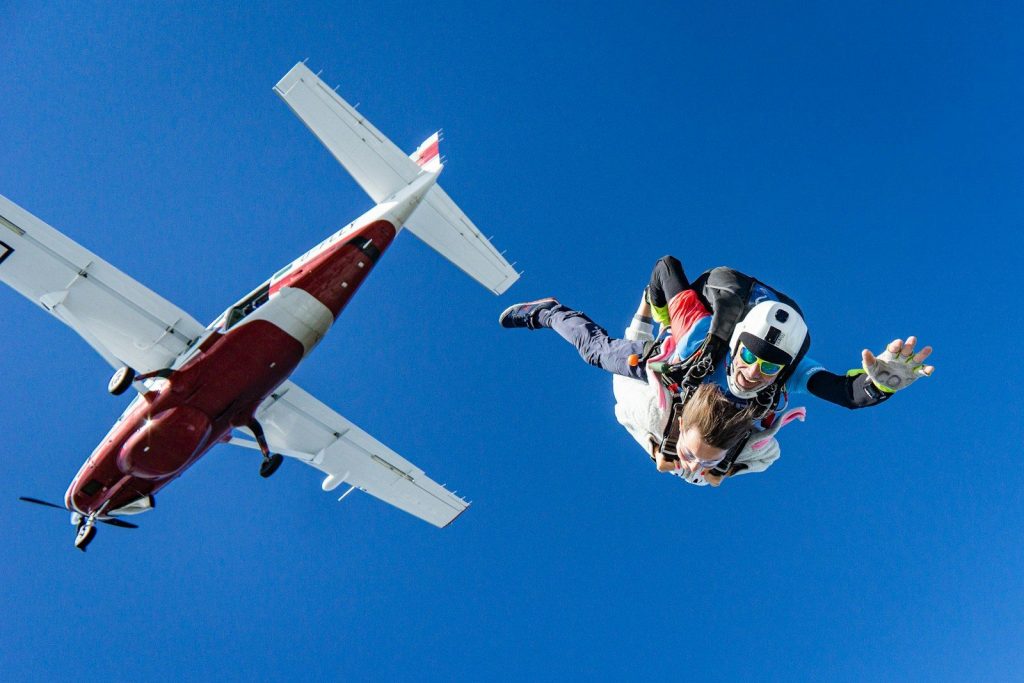
Yes, there is a weight limit for skydiving, and it is one of the most firmly enforced safety requirements in the sport. Is there a weight limit for skydiving is one of the most searched questions among first-time jumpers, and the honest answer involves more nuance than a single number.
Weight limits in skydiving are not arbitrary policies or discrimination. They are rooted in engineering specifications certified by the Federal Aviation Administration, the physical demands placed on instructors during tandem jumps, and the biomechanical realities of how parachute systems behave under varying loads.
Understanding exactly how these limits work, why they vary between dropzones, and what factors beyond a number on a scale actually matter prepares you to plan your first jump realistically and avoid the disappointment of arriving at a dropzone only to be turned away.
The Standard Tandem Skydiving Weight Limit
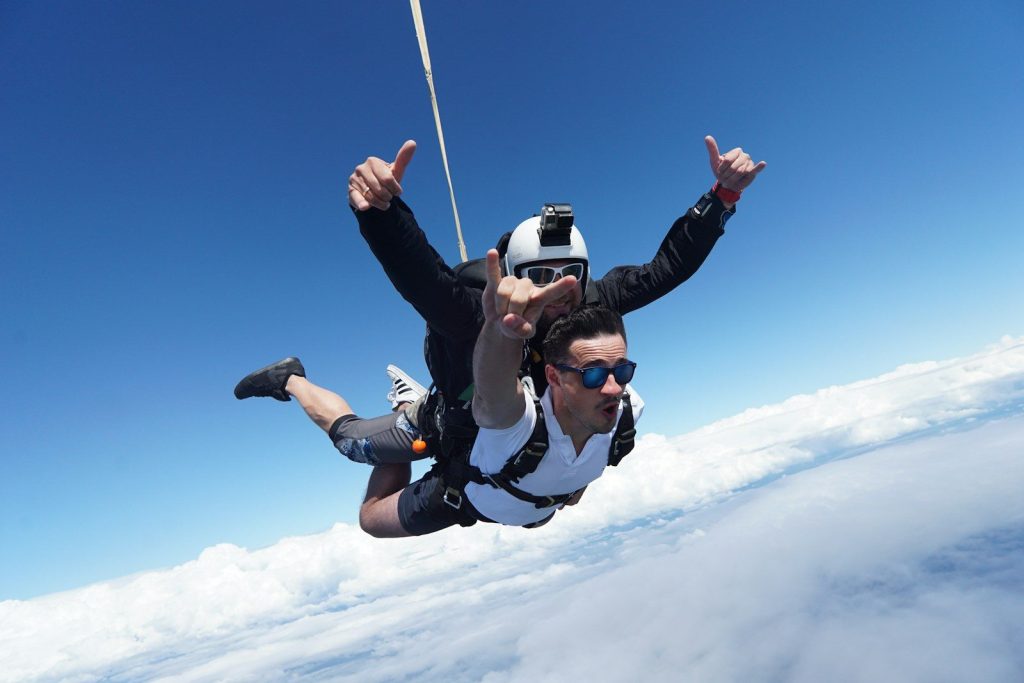
The tandem skydiving weight limit across most US dropzones falls between 220 lbs and 260 lbs, with the most commonly published limit sitting at approximately 225 lbs. This number applies to your total weight fully clothed and wearing shoes, exactly as you will step onto the scale on jump day.
Most dropzones will weigh you before you jump. This is non-negotiable and is not a personal judgment. It is a required safety verification that ensures the combined weight of student, instructor, and equipment stays within the tested limits of the parachute system being used.
For AFF (Accelerated Freefall) solo student programs, the weight limit is typically similar to tandem limits, around 225 to 240 lbs at most dropzones, though some facilities set a lower AFF-specific threshold of 200 lbs.
Why the Weight Limit Exists: The Equipment Science
The weight limit is fundamentally an engineering constraint before it is anything else. Every tandem skydiving rig carries a Technical Standard Order (TSO) issued by the FAA that certifies the total weight the system can safely operate under.
That total weight includes three components: the student, the instructor, and the equipment itself. The equipment typically weighs 50 to 60 lbs. A tandem instructor commonly weighs between 160 and 200 lbs. The FAA-certified maximum total suspended weight for most tandem systems is 500 lbs.
Working backward from that 500 lb ceiling, after accounting for equipment and a typical instructor weight, the remaining capacity available for a student falls in the 220 to 260 lb range depending on that specific instructor’s weight. Exceeding the TSO limits does not just create risk. It renders the jump illegal under FAA regulations.
Height-to-Weight Ratio: Why the Scale Alone Is Not Enough
The number on the scale tells only part of the story. Most dropzones use a height-to-weight proportion assessment alongside the absolute weight limit because body composition and physical proportions significantly affect how a tandem jump actually functions.
A person who is 6’4″ and 240 lbs distributes that weight very differently than a person who is 5’2″ and 240 lbs. The taller individual is likely to have a body shape that fits the harness correctly and presents manageable physical dynamics during freefall and landing. The shorter individual at the same weight may not fit the harness properly and creates a different set of physical demands on the instructor.
This is why many dropzones publish height and weight charts rather than a single number. A representative example from Skydive Newport shows the sliding scale clearly:
| Height | Maximum Weight |
|---|---|
| 4’10” and under | 130 lbs |
| 5’0″ | 150 lbs |
| 5’2″ | 165 lbs |
| 5’4″ | 175 lbs |
| 5’6″ | 210 lbs |
| 5’8″ | 225 lbs |
| 5’9″ and above | 225 lbs |
Shorter individuals face lower absolute weight limits precisely because their body proportions create greater harness fit and physical management challenges at lower weights than taller individuals would.
Is There a Weight Limit for Skydiving? The Surcharge Policy Explained
Many dropzones apply an additional fee for students at the upper range of the allowable weight spectrum. This surcharge typically ranges from $20 to $25 and is paid directly to the instructor.
This policy is not a penalty. It reflects the genuine additional physical demands placed on instructors who jump with heavier students. Tandem instructors must manage body position, stability, and harness security throughout freefall, deploy the parachute, and guide the pair through landing, all while maintaining full control. Heavier students require measurably greater physical exertion at every stage of that process.
Some dropzones require heavier students to demonstrate that they can lift their feet in a seated position and hold that position for landing. This is a practical on-site assessment of whether the student has sufficient core and leg strength to execute the required landing posture safely.
Is There a Weight Limit for Skydiving Beyond the Scale?
Weight alone does not capture the full picture of whether someone can safely skydive. BMI and overall body composition play a meaningful role in the assessment.
A very high BMI can affect harness fit, freefall body position, and the physical dynamics of the tandem pair during deployment and landing even when absolute weight falls within the stated limit. Students with a very high waist-to-hip ratio or significant abdominal girth may find that standard harness sizing does not achieve the secure, correctly positioned fit that safe tandem jumping requires.
Instructors at reputable dropzones are trained to conduct these assessments without causing embarrassment. A harness fit test before boarding the plane is standard practice for students near the upper weight range, and a failed harness fit is a valid safety-based reason for declining a jump regardless of whether the student’s weight is technically within the dropzone’s stated limit.
Health Conditions That Affect Eligibility
Weight limits are not the only physical eligibility factor that first-time skydivers need to consider. Several health conditions independently affect jump eligibility regardless of weight.
Conditions that commonly disqualify or require medical clearance include:
- Recent surgeries, particularly orthopedic procedures affecting joints, spine, or hips
- Cardiovascular conditions including uncontrolled hypertension, recent cardiac events, and arrhythmias
- Seizure disorders that could be triggered by the stress of freefall or oxygen level changes at altitude
- Pregnancy at any stage
- Active ear, sinus, or respiratory infections that create pressure equalization issues during ascent and descent
- Severe anxiety disorders or conditions that may cause panic responses during freefall
Older adults are not automatically disqualified. There is no upper age limit for skydiving, but dropzones typically ask adults over 70 additional health screening questions before approving a jump.
What to Do If You Are Near or Over the Limit
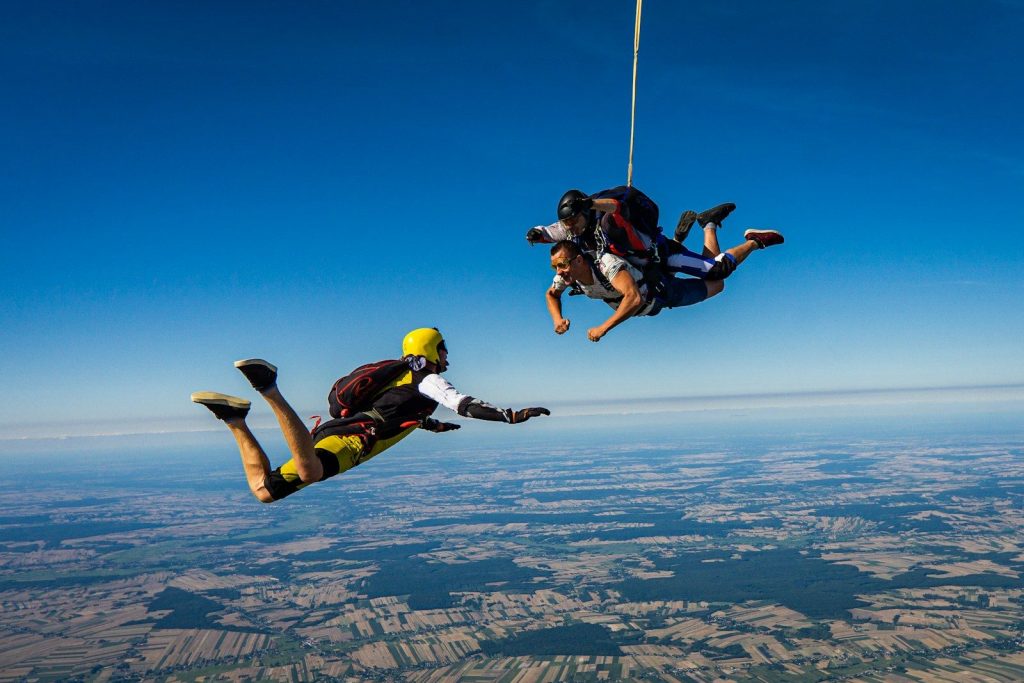
If your weight is at or near a dropzone’s stated limit, proactive communication before booking is the most practical approach.
Call the specific dropzone directly rather than relying on their website’s stated limit. Limits vary by location based on the equipment they use, the weight of their available instructors on any given day, and their internal policy flexibility.
A dropzone that lists 225 lbs as its limit may accommodate a 235 lb student who is 6’2″ with a muscular build, while the same dropzone might decline a 220 lb student whose body proportions create harness fit challenges.
Practical steps for borderline candidates include:
- Calling ahead and describing your height, weight, and general build honestly
- Asking whether an on-site assessment is possible before booking
- Asking about instructor availability, since larger instructors can accommodate heavier students more easily
- Asking about the surcharge policy upfront so there are no surprises on jump day
Being honest with the dropzone is also being honest with yourself. A dropzone that turns you away is prioritizing your safety and the instructor’s safety over the revenue from your booking. That is exactly the kind of decision you want a skydiving operation to make.
Solo Skydiving Weight Limits
For those interested in moving beyond tandem jumping into solo freefall through the AFF program, weight limits apply differently. Because there is no instructor physically attached to you, the absolute weight ceiling is determined by the solo rig’s TSO rating rather than the combined weight calculation.
Most AFF student rigs have total weight limits in the 240 to 260 lb range. The height-to-weight proportion requirement remains relevant because harness fit affects safety in solo jumping just as it does in tandem configurations.
Conclusion
Is there a weight limit for skydiving? Absolutely, and it exists for engineering, biomechanical, and safety reasons that are non-negotiable.
The standard tandem limit ranges from 220 to 260 lbs depending on the dropzone, but height-to-weight proportion, harness fit, body composition, and overall physical health all factor into the final eligibility determination alongside the raw number on the scale.
The most reliable path to a successful first jump is honest communication with your chosen dropzone before booking, realistic self-assessment of your physical readiness, and a genuine respect for the safety framework that makes recreational skydiving one of the safest adventure sports in the world.