
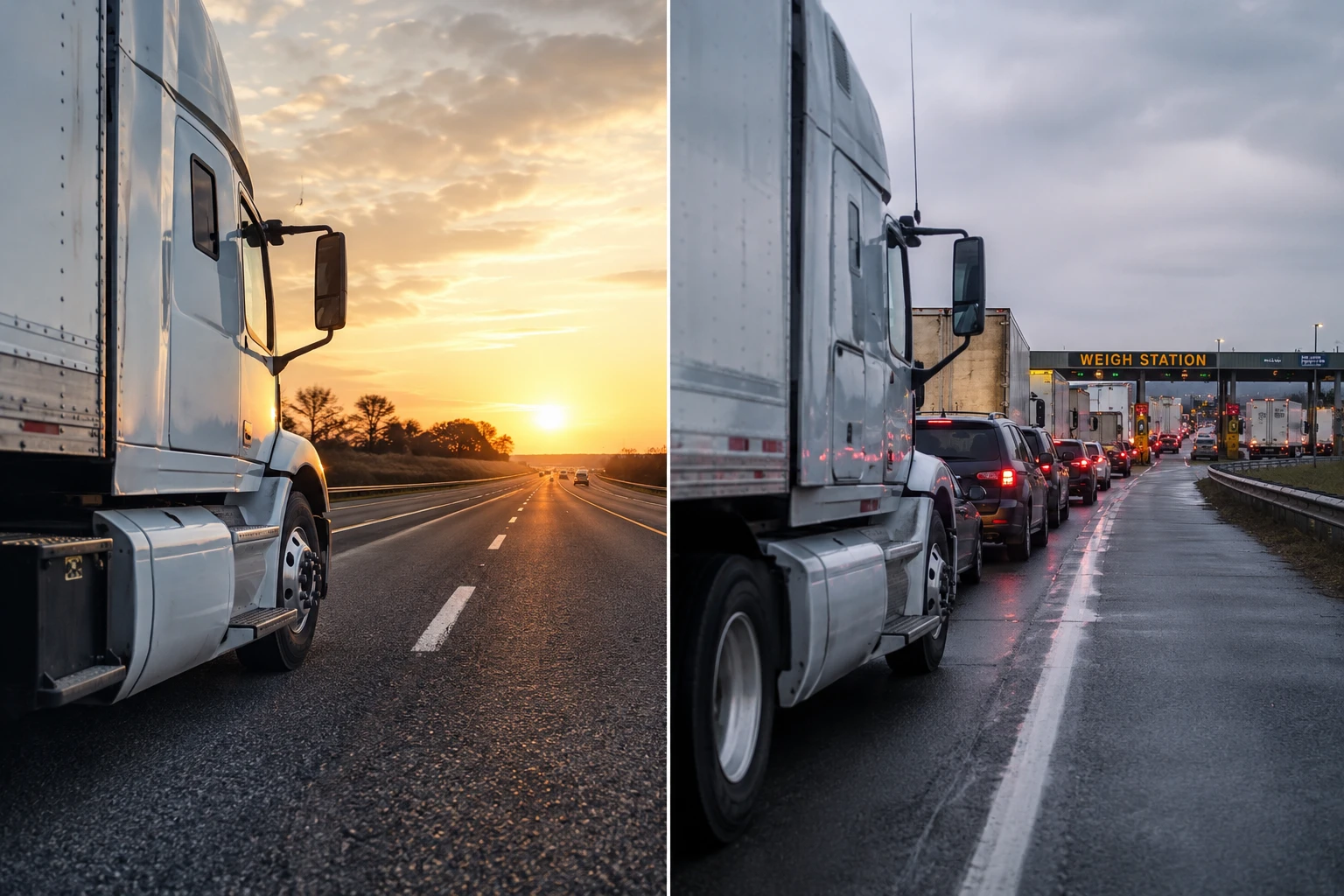
Why Two Truckers Driving the Same Route Make Different Money
On paper, trucking looks simple. A load is picked up in New Jersey and delivered in Texas. Same distance. Same freight rate. Same road.
But anyone who has spent real time behind the wheel knows the truth. The road is never just a straight transaction of miles. It is a chain of decisions, and those decisions decide how much money actually survives the trip.
Two drivers can run the same route and finish with completely different outcomes without either of them doing anything obviously wrong.
The difference is how the trip is managed, moment to moment. It usually comes down to four key areas.
1. The Reality of Driving the Same Trucking Route
Even familiar lanes change their personality.
A stretch of highway that felt smooth last week can slow down today because of construction that was not there before. A city exit that is easy in the early morning becomes unpredictable during afternoon traffic. A weather shift can turn normal driving into cautious, slower movement across multiple states.
One driver treats this as normal variation. He reacts when something happens and keeps going.
The other driver assumes the route will change before it even starts. He expects that timing matters as much as distance. He understands that the same highway behaves differently depending on when you enter it, not just where it goes.
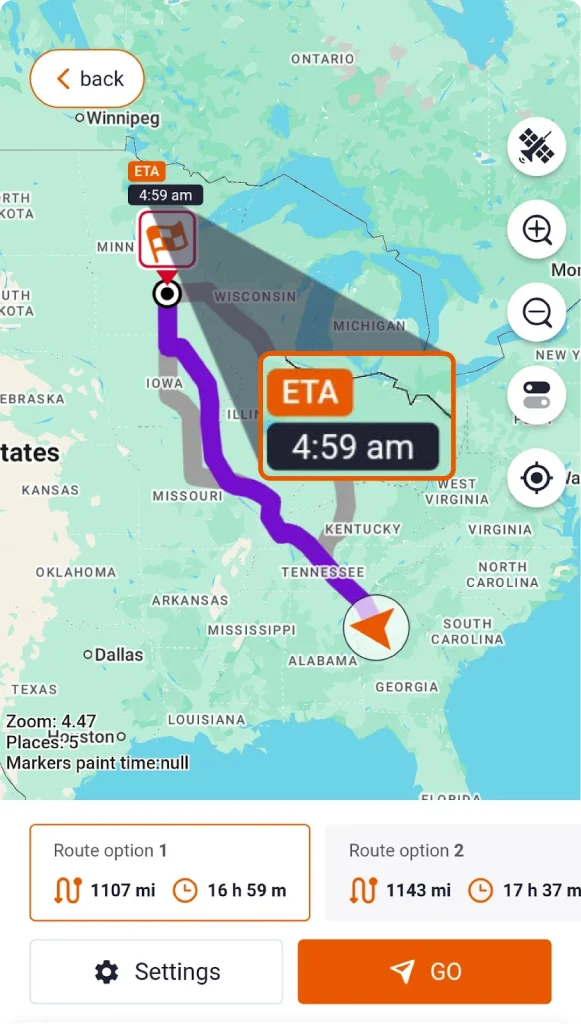
That difference in mindset quietly affects everything that follows.
2. Truck Fuel Stops and Their Hidden Cost on Profit
Fueling looks like the most ordinary part of trucking. You stop, you fill, you leave. It feels automatic.
But fuel stops carry more weight than they appear to.
One driver fuels when the gauge says it is time. The stop is usually the closest familiar truck stop, often right off a major interstate. It is predictable and comfortable, which is exactly why it rarely gets questioned.
But convenience on the highway has hidden costs.
Fuel prices tend to be higher near major corridors. Truck stops at busy exits deal with constant traffic flow, which means longer lines and more idle time. Stopping during peak hours can turn a simple refuel into a long pause where the truck is running but not moving.
Another driver treats fueling as part of planning rather than a reaction. He looks ahead and understands where fuel makes more sense along the route. Not just in terms of distance, but in terms of timing and traffic flow. He avoids stopping when everyone else is stopping.
He tries to align the diesel gas station with quieter windows and more efficient points along the trip.
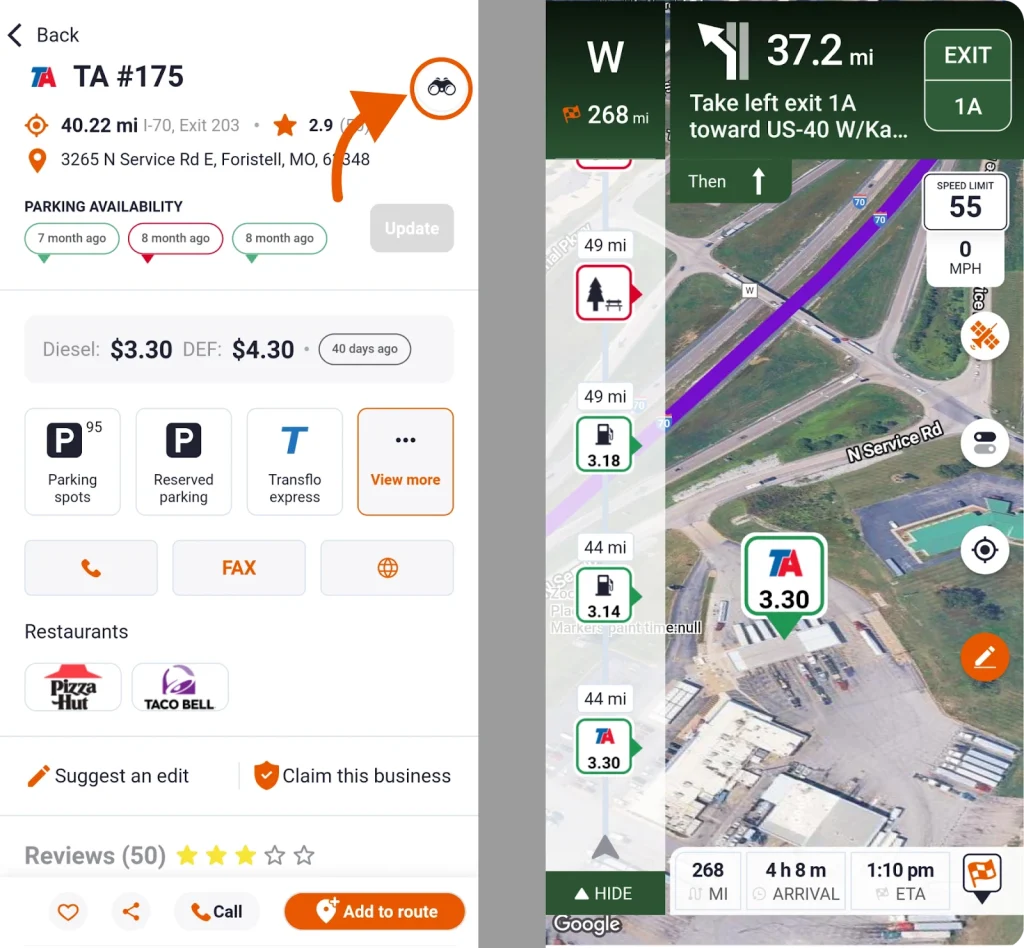
Nothing dramatic happens in either case. Both drivers still get fuel. But one of them pays more in time and small inefficiencies that slowly reduce the overall margin.
3. Traffic Delays and Weigh Stations on Trucking Routes
Most drivers know the problem areas on a route. Certain interchanges slow down. Certain cities always build congestion. Certain corridors near enforcement or inspection points tend to cause delays.
The difference is how that knowledge is used.
One driver accepts those slowdowns as part of the job. If traffic backs up near a weigh station or inspection zone, it becomes something to sit through. The delay is absorbed into the day without changing anything else.
Another driver reads those same patterns differently. He understands that timing changes how severe those slowdowns become. Entering a known congestion zone at the wrong time can cost an hour. Entering it slightly earlier or later can make it almost invisible.
Awareness of structured inspection points becomes more practical when drivers understand how a map of weigh stations fits into overall route timing. It does not remove responsibility or compliance. It simply reduces unnecessary exposure to predictable delays.
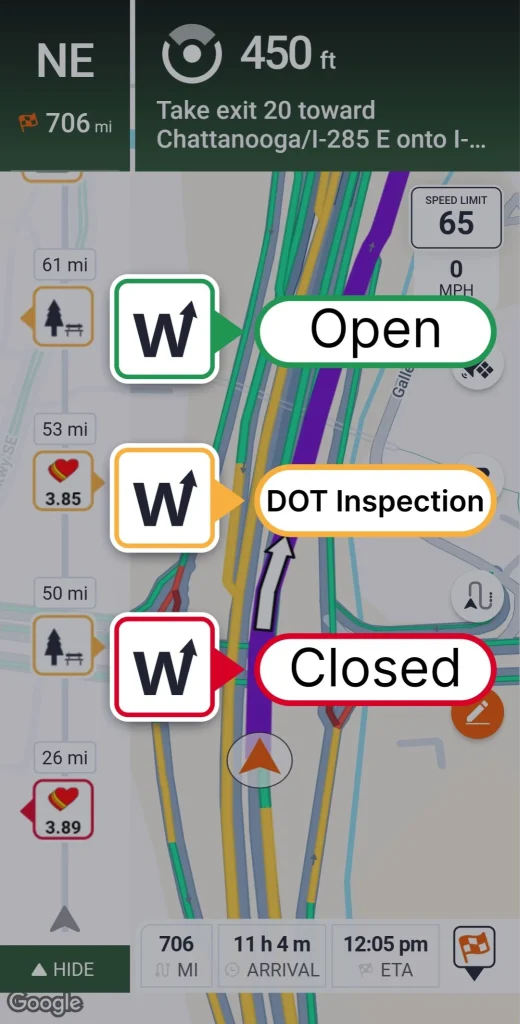
Over time, that changes how consistently the trip moves from point to point.
4. Truck Stop Strategy and Driving Efficiency
Rest stops are often treated as breaks in the journey. In reality, they define how smooth or broken the entire run feels.
One driver stops when it feels necessary. Sometimes that means stopping early because parking is available. Other times it means pushing too far and ending up searching for space when lots are already full. Stops are based on immediate conditions rather than a wider plan.
This creates uneven flow. Some parts of the day feel rushed. Others feel stalled. Rest does not always match fatigue, and driving hours do not always align with the best timing on the road.
Another driver approaches and stops as part of the structure of the trip. Fueling and rest are connected when possible. Parking availability is considered before fatigue becomes an issue. Stops are placed to reduce disruption rather than respond to it.
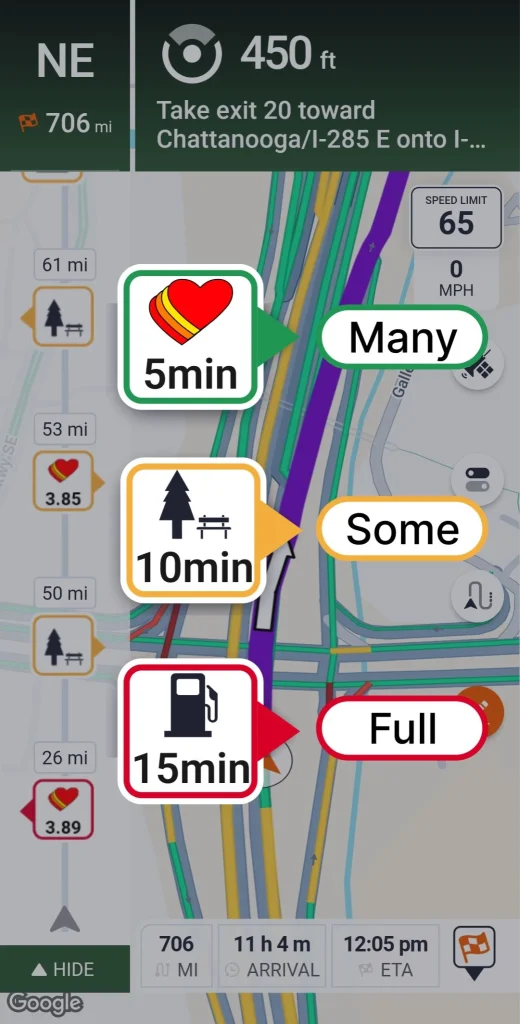
The result: both trucks arrive at the same dock, and both jobs are completed without issue. But one trip quietly protected more value along the way than the other.
Over time, that difference is what separates steady work from consistently better pay.