Axolotl the Mexican Walking Fish
Key Takeaways
The axolotl (Ambystoma mexicanum) is a critically endangered aquatic salamander native to Mexico, famous for its ability to regenerate limbs and its “neotenic” nature, meaning it stays in its larval form throughout its entire life. Unlike most amphibians, they never outgrow their gills or move to land, making them a unique and fascinating species for both scientists and pet enthusiasts.
I first encountered an axolotl in a dimly lit aquarium shop years ago, and I remember being absolutely floored. It looked like a Pokémon—a pink, smiling creature with feathery external gills and tiny, delicate fingers. Since then, I’ve spent countless hours researching these “Mexican walking fish” (which aren’t fish at all) to understand how such a bizarre creature exists in our world.
These animals are more than just internet-famous pets; they are biological marvels. While they are thriving in home aquariums around the globe, their story in the wild is much more complex and, frankly, a bit heartbreaking.
What Exactly Is an Axolotl?
To understand this creature, you have to understand neoteny. Most salamanders start as eggs, hatch into aquatic larvae with gills, and eventually undergo metamorphosis to become land-dwelling adults with lungs. The axolotl decided to skip that last part. It reaches sexual maturity while keeping its feathery gills and finned tail.
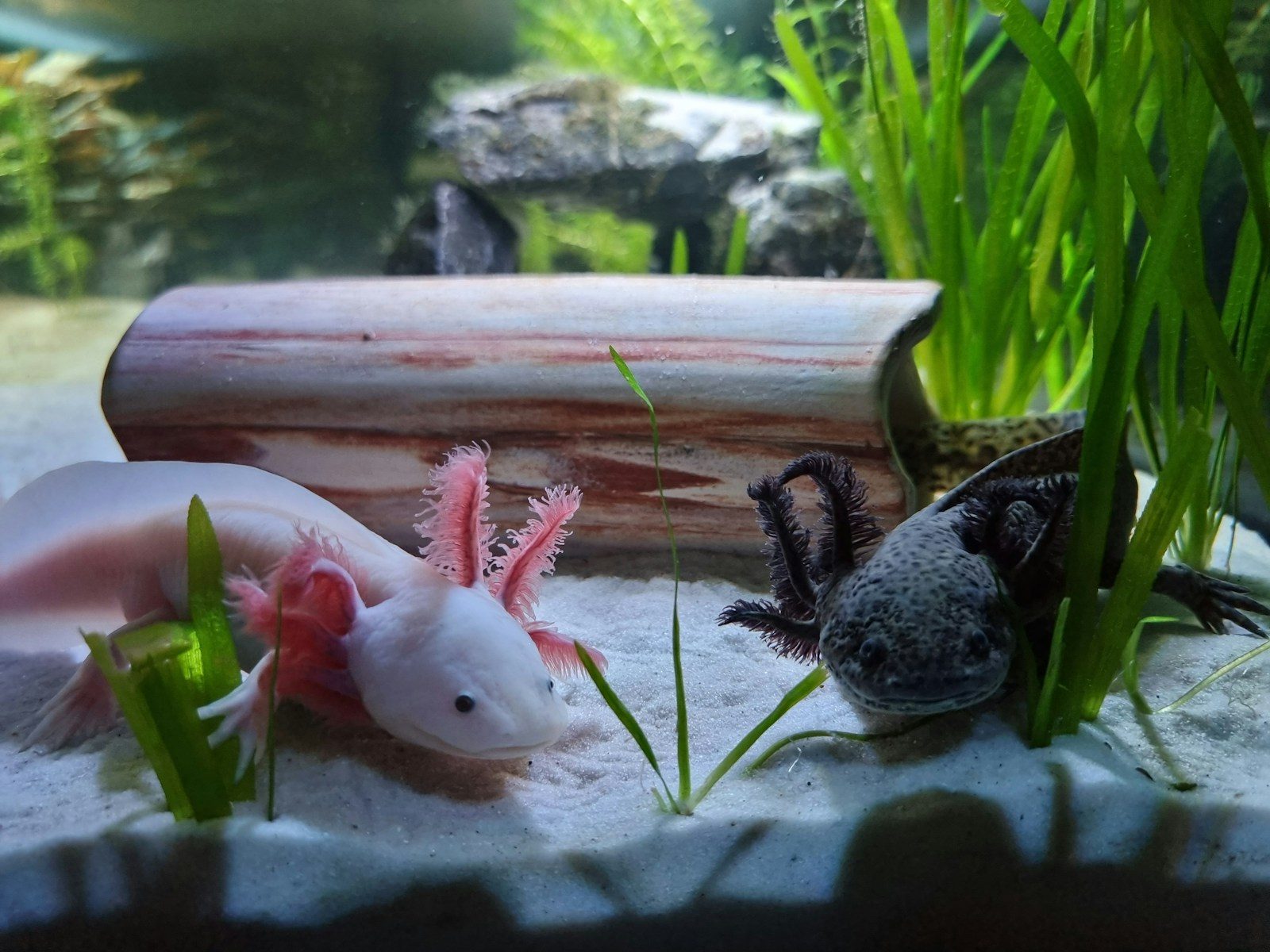
Physically, they grow to be about 9 to 12 inches long. They come in various “morphs” or colors. While the wild ones are usually a mottled dark brown or gray to blend into muddy lake bottoms, the ones we see in captivity are often “leucistic” (pale pink with black eyes) or albino.
The Incredible Science of Regeneration
One reason the scientific community is obsessed with this species is its “superpower.” If an axolotl loses a limb, a tail, or even parts of its heart or brain, it doesn’t scar over. It simply grows the part back.
According to research published by Nature, scientists have successfully sequenced the massive genome of the axolotl—which is about ten times larger than the human genome—to figure out how this regeneration works. They hope that by unlocking these secrets, we might one day apply similar regenerative medicine to humans.
Creating the Perfect Axolotl Habitat
If you are thinking about bringing one of these “water dragons” into your home, you need to realize they are high-maintenance roommates. They are extremely sensitive to their environment. Here is how I set up a proper tank:
- Tank Size: At least a 20-gallon “long” tank for one adult. They prefer floor space over depth.
- Water Temperature: This is the big one. They need cool water, specifically between 60°F and 64°F (15°C to 18°C). Anything above 70°F can lead to stress, fungal infections, and eventually death.
- Filtration: They produce a lot of waste, so you need a good filter, but it must have a low flow. They hate strong currents; it makes them feel like they’re being swept away.
- Substrate: Never use gravel. These guys are vacuum feeders. They will swallow gravel, which leads to “impaction”—a fatal blockage in their gut. Fine sand or a bare-bottom tank is the way to go.
- Lighting: They don’t have eyelids. Keep the lighting dim and provide plenty of hides like PVC pipes or ceramic pots.
Comparing Axolotl Morphs
Not all of these creatures look the same. Breeders have developed several distinct color variations over the years.
| Morph Name | Coloration | Eye Color |
| Wild Type | Dark green, grey, or black with gold flecks | Dark with gold ring |
| Leucistic | Pale pinkish-white body | Black or dark blue |
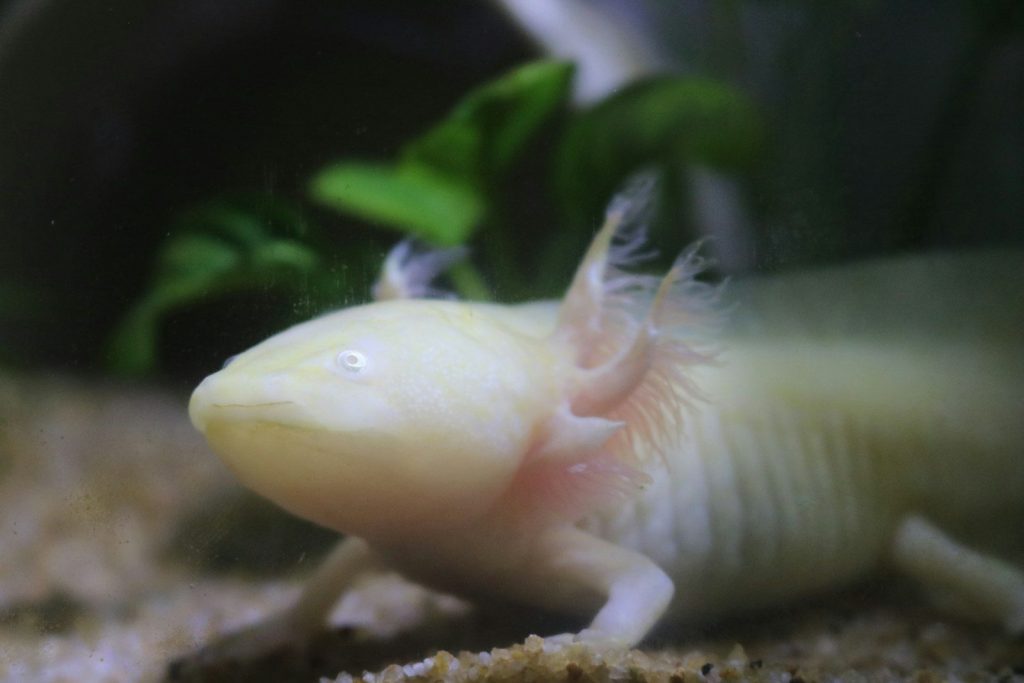
| White Albino | Pure white/pinkish | Clear or pink |
| Golden Albino | Bright yellow to gold | Reflective/Pink |
| Melanoid | Solid matte black or dark blue | Solid black |
The Wild Reality: Xochimilco
It is a strange paradox: the axolotl is everywhere in pet stores but nearly extinct in its natural habitat. Originally, they lived in the high-altitude lakes of Chalco and Xochimilco near Mexico City. Today, only the canals of Xochimilco remain.
Pollution, urban sprawl, and the introduction of invasive species like tilapia and carp (which eat baby salamanders) have decimated the population. The World Wildlife Fund (WWF) notes that the species is currently listed as Critically Endangered on the IUCN Red List. Conservationists are working with local farmers to create “chinampas”—floating gardens that act as natural filters and protected sanctuaries—to give the wild population a fighting chance.
Common Mistakes for New Owners
I see the same errors popping up in hobbyist forums constantly. Avoiding these will save you a lot of heartache:
- Using a heater: Most aquarium fish need heaters. For this species, a heater is a death sentence. You usually need a chiller instead.
- Impulse buying: People see a “cute” animal and buy it without cycling the tank. Without a nitrogen cycle, the ammonia from their waste will burn their skin and gills.
- Housing with fish: Fish will often nipping at the feathery gills, and the salamander will try to eat any fish small enough to fit in its mouth. It’s a lose-lose situation.
Steps to Cycle Your Aquarium
Before your pet arrives, you must prepare the water. This process takes 4 to 8 weeks.
- Set up the tank with sand, filter, and dechlorinated water.
- Add a source of ammonia (like pure liquid ammonia or fish food) to kickstart bacterial growth.
- Test the water daily using a liquid test kit for Ammonia, Nitrites, and Nitrates.
- Wait for Ammonia and Nitrites to drop to 0 ppm, leaving only Nitrates.
- Perform a partial water change to lower Nitrates before adding your animal.
The Diet of a Predator
Feeding time is my favorite part. These animals are carnivores. In the wild, they eat small fish, insects, and worms. In captivity, I’ve found that high-quality earthworms (nightcrawlers) are the gold standard for nutrition.
If earthworms are too big, you can cut them in half. You can also supplement their diet with bloodworms or sinking carnivore pellets, but the worms should be the staple.
Pros and Cons of Ownership
Pros:
- Incredibly long lifespan (they can live 10 to 15 years with good care).
- Unique appearance that serves as a great conversation starter.
- Relatively quiet and peaceful behavior.
Cons:
- Strict temperature requirements often require expensive chillers.
- High bioload requires frequent water testing and changes.
- They are “look but don’t touch” pets; their skin is very permeable and fragile.
Frequently Asked Questions
Can an axolotl live on land?
No. They are fully aquatic. While they do have rudimentary lungs, they rely on their gills and skin for oxygen. Forcing one out of water is fatal. In extremely rare, stressful laboratory conditions, they can be forced to metamorphose, but it significantly shortens their lifespan.
How big do they get?
Most reach between 9 and 10 inches, though some “monsters” can grow up to 12 inches. Make sure your tank is long enough for them to stretch out and walk comfortably.
Do they get lonely?
Not really. They aren’t social animals. While you can keep two together if they are the same size and have enough space, they don’t “crave” companionship. If one is significantly smaller, the larger one might accidentally (or intentionally) eat its tank mate.
Why are my axolotl’s gills shrinking?
This is usually a sign of poor water quality or high stress. High ammonia levels or temperatures above 70°F will cause the filaments on the gills to deteriorate. If this happens, check your water parameters immediately.
What do they eat?
As mentioned, earthworms are best. They also enjoy blackworms, brine shrimp, and specially formulated sinking pellets. Avoid feeding them “feeder fish” from pet stores, as these often carry parasites.
The axolotl is a window into a different kind of biology. Whether you are a student of genetics or a dedicated aquarist, there is no denying the charm and mystery of these animals. By supporting conservation efforts and practicing responsible pet ownership, we can ensure that the “smiling” face of Xochimilco doesn’t vanish from the world.