From Information to Insight: The Challenge of Making Science Accessible in a Digital World
There has never been more scientific information available to the public. Research papers are published at record pace, data flows freely across platforms, and digital media has made complex discoveries instantly shareable. Yet for all this access, clarity has become harder to find. Trust, once anchored in institutions and editorial rigor, is increasingly fragile in a landscape shaped by speed, algorithms, and competing narratives.
This tension defines one of the central challenges in modern science communication: translating complexity into understanding without compromising accuracy. The problem is not a lack of information. It is the growing gap between information and insight.
Digital education has transformed how people engage with science, but it has also introduced new pressures. Content must compete for attention in crowded feeds. Headlines are optimized for clicks. Nuance is often sacrificed in favor of simplicity. In this environment, even well-intentioned science communication can become distorted, reduced to fragments that travel faster than the full story ever could.
For audiences, this creates a paradox. The tools to learn have never been more powerful, yet the ability to discern trustworthy content requires more effort than ever. The responsibility, then, falls on platforms, publishers, and creators to rebuild clarity and credibility in a system that does not always reward either.
At the core of this challenge is a fundamental question: how do you make science accessible without making it inaccurate?
The answer begins with editorial discipline. Science communication is not simply about simplifying language. It is about preserving meaning. Translating a complex study into a digestible format requires judgment, context, and restraint. What is left out matters as much as what is included. Without careful framing, simplification can quickly become misrepresentation.
This is where editorial standards play a critical role. Trustworthy content is built through consistency, transparency, and a commitment to evidence. It requires verification processes that go beyond speed, ensuring that information is not only engaging but also correct. In a digital environment that rewards immediacy, maintaining these standards is both more difficult and more essential.
Equally important is the user experience. Digital education platforms are not just repositories of information. They are environments where learning happens. Design, structure, and interactivity all influence how users interpret and retain information. A well-designed experience can guide users through complexity, helping them build understanding step by step. A poorly designed one can overwhelm or mislead, regardless of the quality of the content itself.
Trust is not built through a single article or feature. It is accumulated over time through repeated, reliable interactions. Users return to platforms that consistently deliver clarity and accuracy. They disengage from those that prioritize attention over substance. In this sense, long-term credibility is not just an ethical consideration. It is a strategic one.
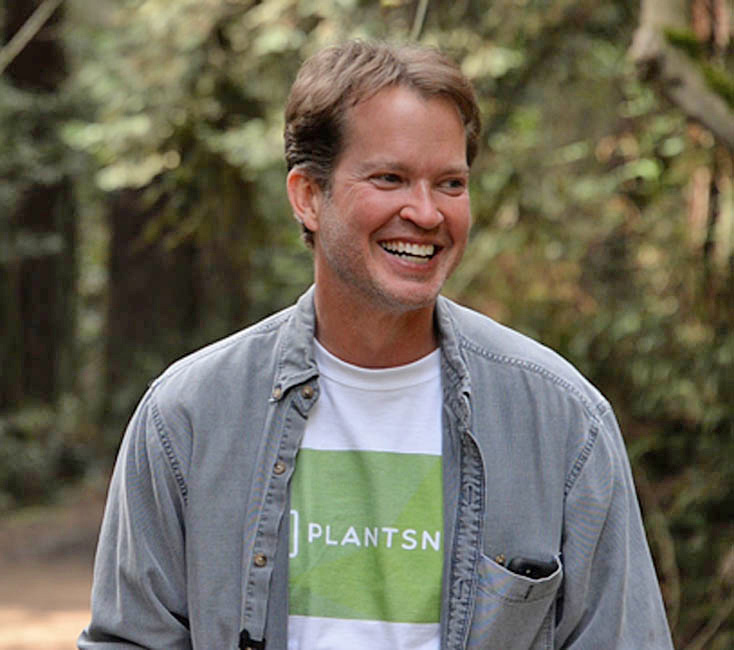
Few figures illustrate this balance between accessibility and accuracy as clearly as Eric Ralls, whose work sits at the intersection of science communication, digital education, and environmental media. Across multiple platforms, his focus has remained consistent: making science understandable and engaging without diluting its integrity.
Ralls’ approach is shaped by both technological innovation and editorial intent. From early ventures like Cosmiverse and RedOrbit to the development of Earth.com, his work has consistently emphasized user-centered science communication. These platforms were designed not only to inform but to invite curiosity, presenting complex topics in ways that feel approachable without sacrificing depth .
This philosophy extends into his work with AI-driven applications such as PlantSnap and EarthSnap. These tools leverage advanced computer vision to identify plants and other living organisms, transforming passive observation into active learning. The experience is immediate and intuitive. A user points their camera, receives an identification, and gains access to contextual information that deepens their understanding of the natural world.
Yet the technology itself is only part of the equation. The real challenge lies in ensuring that these interactions remain accurate and meaningful at scale. Identifying millions of species with high precision is not simply a technical hurdle. It is a question of trust. Users rely on these tools not just for convenience but for knowledge. Errors, if unaddressed, can undermine confidence in the entire system.
Ralls has acknowledged this tension directly, emphasizing the importance of balancing engagement with accuracy. The goal is not to make science easier by removing complexity, but to make it more accessible by guiding users through it. That distinction is critical. Accessibility should expand understanding, not replace it.
One of the more significant shifts in digital science communication is the rise of participatory models. Users are no longer passive consumers of information. They are contributors. Through citizen science initiatives, individuals can collect data, share observations, and participate in broader research efforts. This has the potential to dramatically expand the scope of scientific knowledge, creating real-time, global datasets that were previously impossible to achieve.
Ralls has been an advocate for this model, describing a future where everyday interactions with nature contribute to a larger understanding of biodiversity. By integrating identification tools with data-sharing capabilities, platforms can transform individual curiosity into collective insight .
However, this approach introduces additional responsibilities. Open systems require safeguards. Data must be verified, privacy must be protected, and sensitive information, particularly regarding endangered species, must be handled with care. The success of participatory science depends not just on scale, but on trust in how that data is managed and used.
This brings the conversation back to a central theme: credibility. In a digital ecosystem where content is abundant, credibility becomes the defining factor that separates meaningful platforms from disposable ones. It is not enough to capture attention. Platforms must earn confidence.
Achieving this requires a long-term perspective. Short-term metrics such as clicks and shares can provide immediate feedback, but they do not measure trust. In fact, optimizing solely for these metrics can erode it. Sensational headlines, oversimplified conclusions, and incomplete narratives may drive traffic, but they weaken the foundation on which lasting engagement is built.
By contrast, platforms that prioritize accuracy, transparency, and user value may grow more slowly, but they build something more durable. Their audiences are not just visitors. They are informed participants who return because they trust the content and the experience.
This distinction is particularly important in environmental media, where the stakes are high and the subject matter is inherently complex. Climate change, biodiversity loss, and ecological systems cannot be reduced to simple narratives without losing critical context. Communicating these topics effectively requires both scientific rigor and narrative skill.
Eric Ralls’ work in environmental media reflects this understanding. Through Earth.com, he has focused on delivering content that is both accessible and grounded in credible sources, reaching a broad audience without compromising on quality . The platform’s growth demonstrates that there is demand for trustworthy science communication, even in a competitive digital landscape.
The broader implication is clear. The challenge of modern science communication is not simply technological. It is editorial and ethical. The tools available today are powerful, but they must be used with intention. Without that, the abundance of information risks becoming a barrier rather than a resource.
Looking ahead, the role of AI in digital education will continue to expand. Personalization, summarization, and real-time interaction will make science more accessible than ever. But these advancements will also amplify existing challenges. The speed at which information can be generated and distributed will increase, making the need for reliable filters and editorial oversight even more critical.
The platforms that succeed in this environment will not be those that produce the most content, but those that maintain the highest standards. They will recognize that trust is not a feature that can be added later. It must be embedded from the beginning, in both design and process.
For science communication, the goal is not to simplify the world to the point where it becomes unrecognizable. It is to illuminate complexity in a way that invites understanding. This requires a careful balance, one that respects both the intelligence of the audience and the integrity of the subject.
From information to insight is not a linear path. It is a process that depends on clarity, context, and credibility. In a digital world overflowing with data, those qualities are no longer optional. They are essential.
The future of science communication will be shaped not by how much information is available, but by how effectively it is translated into knowledge that people can trust and use.