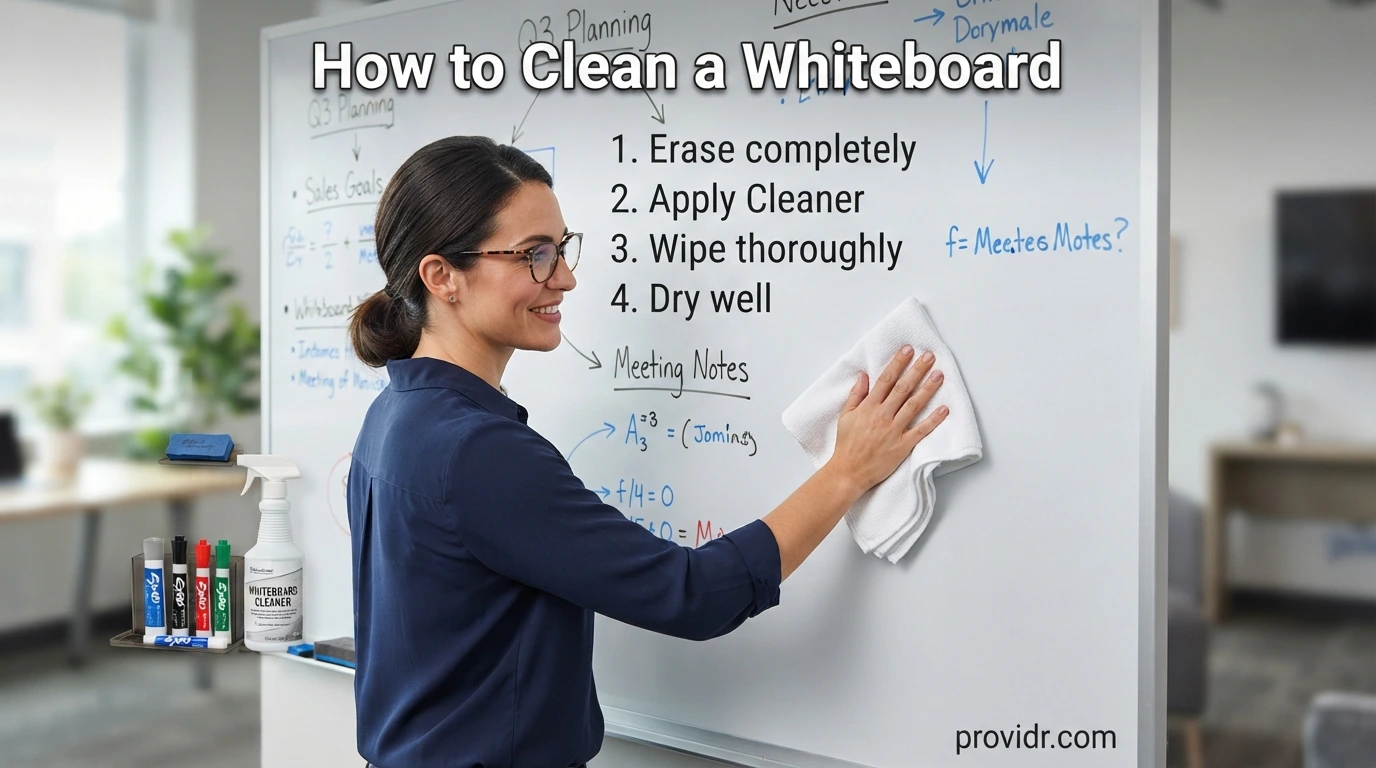
How to Clean a Whiteboard: The Complete Guide
A dirty whiteboard fights you back. Markers skip, old writing ghosts through your new notes, and the surface starts to look gray no matter how hard you scrub. Regular cleaning fixes all of this. It keeps ink gliding smoothly, stops ghosting before it sets in, and adds years to the life of your board. Here is the quick answer of How to Clean a Whiteboard: The Complete Guide .
To clean a whiteboard the right way, spray a whiteboard cleaner or a small amount of isopropyl alcohol onto a microfiber cloth, wipe the surface in circular motions, then buff dry with a clean cloth. Avoid paper towels, abrasive pads, and harsh chemicals, since these scratch the surface and cause permanent ghosting over time.
Now let’s go deeper, because different whiteboards and different stains need slightly different approaches.
Types of Whiteboards and How Cleaning Differs
Not all whiteboards are the same material. Knowing your board type helps you avoid damaging it.
Melamine Whiteboards
Melamine is the most common and most affordable whiteboard surface. It works fine for light use but scratches easily and ghosts faster than other materials.
- Cleaning approach: gentle wiping only, avoid alcohol on a daily basis since it can wear down the coating over time.
Porcelain and Ceramic Whiteboards
Porcelain boards are the most durable option. Schools and offices often choose porcelain because it resists scratching and ghosting far better than melamine.
- Cleaning approach: handles isopropyl alcohol and stronger cleaning methods well, making it the easiest surface to restore.
Painted Steel Whiteboards
Painted steel sits between melamine and porcelain in durability. It resists dents but can scratch if cleaned with abrasive tools.
- Cleaning approach: similar to melamine, stick to gentle products and soft cloths.
Tempered Glass Whiteboards
Glass boards are the most scratch-resistant and ghost-resistant option available. They also look sleek in modern offices.
- Cleaning approach: handles almost any non-abrasive cleaner well, including glass cleaner, without risk of surface damage.
Routine Whiteboard Cleaning: Step-by-Step
Do this after each use, or at least once a day in busy classrooms and offices.
- Erase all dry erase marker ink using a proper whiteboard eraser, not a cloth or tissue.
- Spray a small amount of whiteboard cleaner directly onto a microfiber cloth, not directly onto the board.
- Wipe the surface in small circular motions, working from top to bottom.
- Buff the board dry with a separate clean, dry microfiber cloth.
- Check for streaks under good lighting and repeat if needed.
This simple routine prevents most staining and ghosting problems before they start.
Read More: https://providr.com/moving-home-without-losing-your-mind/
Deep Cleaning a Whiteboard
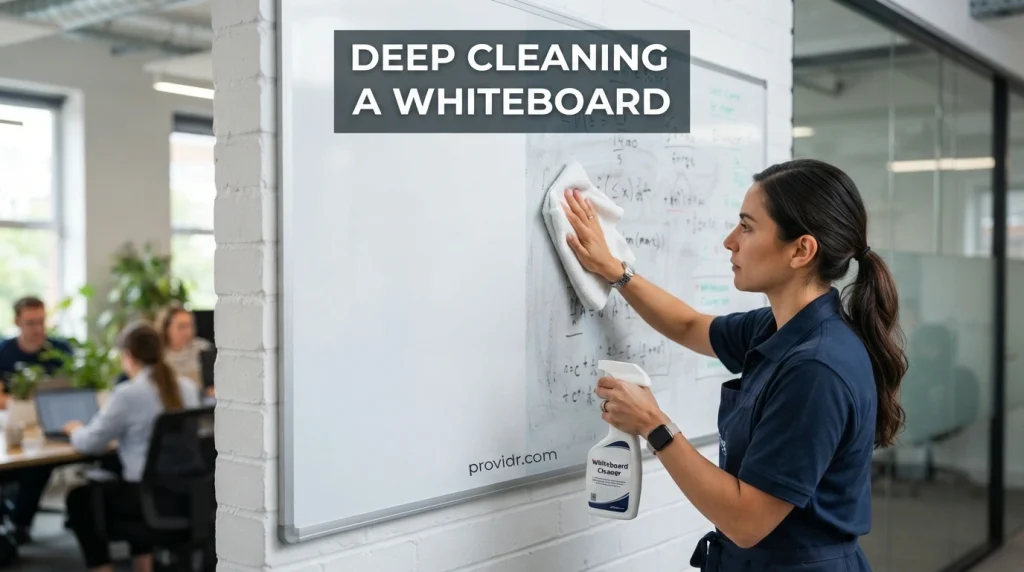
Deep cleaning removes buildup that routine wiping misses. Do this weekly for heavily used boards, or monthly for lighter use.
- Remove all visible marker residue with a dry eraser first.
- Apply isopropyl alcohol (70 percent works well) to a microfiber cloth.
- Wipe the entire surface firmly, focusing on any dull or hazy patches.
- Let the alcohol sit for 30 seconds on stubborn spots before wiping again.
- Finish with a dry cloth to remove any remaining residue and restore shine.
Isopropyl alcohol works safely on porcelain, ceramic, and glass boards. Use it sparingly on melamine, since frequent alcohol use can wear down the coating faster.
How to Remove Ghosting
Ghosting happens when old marker ink leaves a faint shadow on the board, even after erasing. It is one of the most common whiteboard complaints.
Why Ghosting Happens
- Ink sits too long before being erased
- Low-quality or expired dry erase markers
- Permanent marker used by accident
- Wiping with the wrong cloth, which grinds ink into the surface
How to Fix Ghosting
- Apply isopropyl alcohol to a microfiber cloth.
- Rub firmly over the ghosted area in circular motions.
- For stubborn ghosting, let the alcohol sit for one minute before wiping again.
- Repeat as needed, checking progress under bright light.
For melamine boards with heavy ghosting, sometimes light ghosting simply cannot be fully removed. This is a sign the board’s coating has worn thin and may need replacing soon.
Removing Permanent Marker from a Whiteboard
Permanent marker on a whiteboard looks alarming, but it is often fixable.
- Trace over the permanent marker with a dry erase marker of the same color.
- Wait a few seconds, then wipe with a dry cloth or eraser.
- The dry erase marker’s solvents loosen the permanent ink, lifting it off the surface.
- If residue remains, follow up with isopropyl alcohol on a microfiber cloth.
This trick works because dry erase marker ink contains a release agent that permanent marker ink lacks.
Removing Tape Residue and Adhesive Marks
Sticky residue from tape or labels needs a gentler touch than alcohol alone.
- Apply a small amount of rubbing alcohol directly to the residue.
- Let it sit for one to two minutes to loosen the adhesive.
- Gently scrape with a plastic scraper or old gift card, never metal.
- Wipe clean with a microfiber cloth and finish with glass cleaner if needed for shine.
Removing Grease, Dirt, and Old Ink Buildup
For boards with years of buildup, combine gentle cleaners for the best results.
- Mix a few drops of mild dish soap with warm water.
- Dampen a microfiber cloth, wringing out excess water so it is barely moist.
- Wipe the entire surface, focusing on greasy or heavily stained areas.
- Rinse the cloth and wipe again with clean water to remove soap residue.
- Dry immediately with a separate cloth to avoid water spots.
Using a Vinegar Solution
A mix of equal parts water and white vinegar works as a gentler alternative to alcohol for boards with sensitive coatings.
- Mix the solution in a spray bottle.
- Spray lightly onto a microfiber cloth.
- Wipe the surface, then dry thoroughly.
Avoid vinegar on porcelain boards with metal frames, since the acidity can dull metal trim over time.
Comparison Table: Cleaning Methods by Effectiveness and Safety
| Method | Best For | Effectiveness | Safety on Melamine | Safety on Porcelain/Glass | Cost |
| Whiteboard cleaner spray | Daily cleaning, light stains | High | Safe | Safe | Low to moderate |
| Isopropyl alcohol | Ghosting, deep stains | Very high | Use sparingly | Very safe | Low |
| Mild dish soap and water | Grease, dirt buildup | Moderate | Safe | Safe | Very low |
| Vinegar solution | Light stains, gentle cleaning | Moderate | Safe | Safe (avoid metal frames) | Very low |
| Dry erase marker trick | Permanent marker removal | High | Safe | Safe | Very low |
| Abrasive pads or scrubbers | Not recommended | Damaging | Unsafe | Unsafe | N/A |
Restoring an Old, Heavily Ghosted Whiteboard
Old boards with years of neglect can often be brought back to life.
- Start with a full alcohol wipe-down across the entire surface.
- Focus extra attention on ghosted zones, letting alcohol sit before each wipe.
- Follow with a mild soap and water wash to remove any leftover film.
- Dry completely, then apply a thin layer of whiteboard restorer or polish if available.
- Test with a dry erase marker to confirm the surface erases cleanly again.
If ghosting remains heavy after multiple attempts, the board’s surface coating has likely broken down permanently. At that point, replacement is more practical than continued restoration.
Cleaning a Brand-New Whiteboard Before First Use
New whiteboards often have a light manufacturing residue that affects how markers write.
- Wipe the entire surface with a dry microfiber cloth to remove dust.
- Follow with a light pass of isopropyl alcohol on a clean cloth.
- Dry the board fully before writing on it for the first time.
- Use only dry erase markers from the start to avoid early staining.
Preventing Future Stains and Ghosting
- Erase within 24 hours of writing, ideally the same day.
- Use high-quality dry erase markers, since cheap ones stain faster.
- Avoid permanent markers near the board entirely, even for labeling nearby items.
- Wipe with a microfiber cloth, never paper towels or rough fabric.
- Clean weekly, even if the board looks fine, to stop buildup before it starts.
Read More: https://providr.com/how-to-make-transactions-on-my-metatrader-5-a-beginners-step-by-step-guide/
Common Whiteboard Cleaning Mistakes
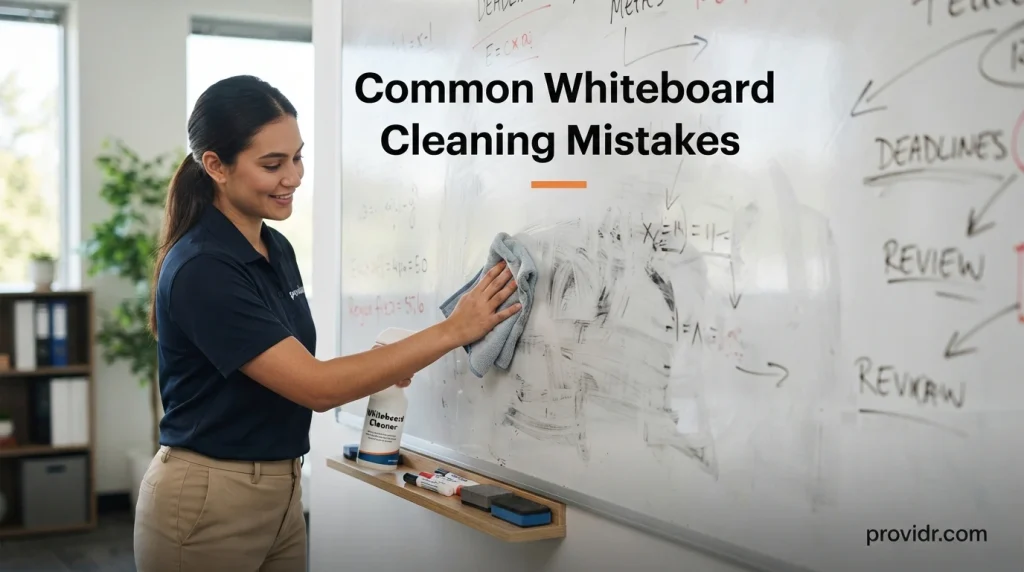
- Using abrasive pads or scouring sponges. These scratch the surface and create permanent grooves where ink collects.
- Using harsh chemicals like bleach or ammonia-based cleaners. These break down the board’s coating and speed up ghosting.
- Using excessive water. Water can seep behind the board’s frame edges and damage the backing material.
- Using wax-based furniture polish. Wax leaves a film that makes markers smear instead of erase cleanly.
- Using the wrong markers. Chalk markers, oil-based markers, or permanent markers all cause staining that basic dry erase markers avoid.
- Wiping with paper towels. Paper fibers are more abrasive than they look and slowly dull the board’s surface over time.
Maintenance Tips: How Often to Clean
| Frequency | Task |
| Daily | Erase all writing, quick wipe with microfiber cloth |
| Weekly | Full cleaner or alcohol wipe-down, eraser cleaning |
| Monthly | Deep clean for ghosting, check for stains needing extra attention |
How to Clean a Whiteboard Eraser
Dirty erasers spread ink around instead of removing it.
- Tap the eraser against a hard surface to release loose dust.
- Wipe the felt pad with a slightly damp cloth.
- Let it air dry completely before using it again.
- Replace erasers once the felt looks permanently gray or worn thin.
When to Replace Dry Erase Markers
Replace markers once they start skipping, fading, or requiring heavy pressure to write. Dried-out markers also contribute to poor erasing, since they leave thicker, harder-to-remove ink layers.
Reducing Ghosting Long-Term
- Erase daily rather than letting writing sit for days
- Choose porcelain or glass boards for heavy daily use environments
- Avoid cheap markers with low-quality ink
- Deep clean monthly instead of waiting for visible ghosting
Maintaining Classroom, Office, and Home Whiteboards
Classroom Whiteboards
Classrooms see heavy daily use, so daily erasing and weekly deep cleaning matter most here. Assign a rotating cleaning task if student helpers are available.
Office Whiteboards
Offices often use whiteboards for ongoing project tracking, which means ink sits longer before erasing. Set a weekly cleaning reminder to avoid ghosting from long-term notes.
Home Whiteboards
Home boards see lighter use but often get neglected for weeks. A quick monthly deep clean keeps home whiteboards looking fresh even with occasional use.
FAQs
What is the best way to clean a whiteboard? Spray whiteboard cleaner or isopropyl alcohol onto a microfiber cloth, wipe in circular motions, then dry with a separate clean cloth.
Can I use vinegar to clean a whiteboard? Yes. A diluted vinegar and water solution works as a gentle cleaner, especially for boards with sensitive coatings, though avoid it near metal frames.
Does rubbing alcohol damage a whiteboard? Used occasionally, isopropyl alcohol is safe for most whiteboards and works well for ghosting. Frequent use on melamine boards can wear the coating faster, so use it for deep cleaning rather than daily wiping.
How do you get permanent marker off a whiteboard? Trace over the permanent marker with a dry erase marker, wait a few seconds, then wipe clean. The dry erase ink’s solvents help lift the permanent ink.
Why does my whiteboard have ghosting? Ghosting happens when ink sits too long, low-quality markers are used, or the board is wiped with the wrong materials, grinding ink into the surface over time.
Can you use Windex on a whiteboard? Glass cleaner works fine on porcelain, ceramic, and tempered glass boards, but it is less ideal for melamine, which can be more sensitive to certain chemical ingredients.
How often should you clean a whiteboard? Erase daily, wipe down weekly with a proper cleaner, and deep clean monthly to prevent long-term staining and ghosting.
What cloth is best for cleaning a whiteboard? Microfiber cloths work best. They lift ink and dust without scratching the surface, unlike paper towels or rough fabric.
Can a badly ghosted whiteboard be restored? Often yes, using isopropyl alcohol and repeated deep cleaning. If ghosting remains after multiple attempts, the board’s coating has likely broken down and replacement may be the better option.
What should you never use to clean a whiteboard? Avoid abrasive pads, bleach, ammonia-based cleaners, excessive water, wax-based polish, and permanent or oil-based markers near the board.
Final Recommendation: The Safest Cleaning Routine
For most whiteboards, the safest routine combines daily erasing, weekly cleaning with a microfiber cloth and whiteboard cleaner or diluted alcohol, and monthly deep cleaning for ghosting prevention.
- Melamine boards: stick to gentle cleaner and light alcohol use, since the coating wears faster.
- Porcelain and ceramic boards: handle alcohol and stronger cleaning well, making them the easiest to maintain long-term.
- Painted steel boards: treat similarly to melamine, avoiding abrasive tools.
- Tempered glass boards: the most durable option, tolerating almost any non-abrasive cleaner without damage.
Stick to this routine, and your whiteboard will stay bright, smooth, and ghost-free for years, whether it sits in a classroom, an office, or your home.