
Why Does the Litter Box Smell So Bad, and What Helps?
If you’ve ever walked into a room and immediately knew there’s a litter box nearby, you already know how strong this smell can get. It’s one of the most common complaints cat owners have, and it’s also one of the most fixable, once you understand what’s causing it.
Why Litter Boxes Smell as Bad as They Do
Litter box odor is mostly a combination of ammonia from urine breaking down and bacteria building up in anything that isn’t cleaned regularly. The type of litter plays a big role here too. Some litters clump loosely or slowly, which gives odor more time to build before it’s scooped out. Others are naturally dustier, which can carry smell further into a room every time your furry friend puts their paws in the box.
Scooping frequency matters just as much as the litter itself. A box that gets scooped once a day or less gives odor more time to develop than one that’s cleaned after every use.
What Helps
A few changes tend to make the biggest difference in keeping litter box smell under control:
- Scoop more often. Once or twice a day is the general standard, but cats (and your nose) will thank you for more frequent cleanups.
- Choose a fast-clumping litter. Quick, firm clumps trap odor before it has a chance to spread, and make full cleanups easier.
- Watch the dust level. Low-dust litter doesn’t just mean less mess; it also means less odor getting carried into the air every time the box gets scooped.
- Do a full litter change regularly. Even with daily scooping, litter should be fully replaced every couple of weeks to keep odor from building up in the base layer.
- Keep the box in a ventilated spot. Ai
- Airflow makes a bigger difference than most owners expect.
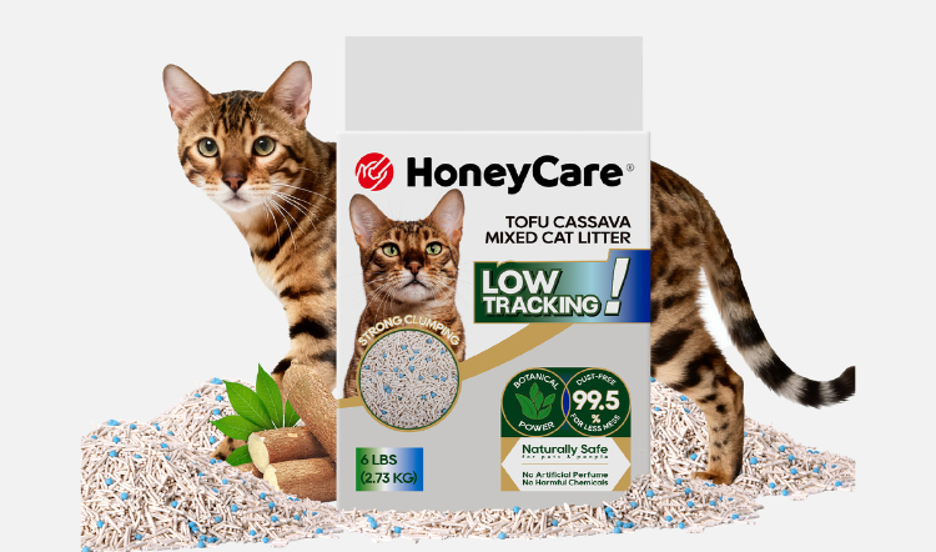
Litter choice ends up being one of the most controllable factors on this list, since it affects clumping speed, dust, and how often the box needs a full change. HoneyCare’s Tofu Cassava Mixed Litter is one option built around these exact factors. It’s made from plant-based ingredients like tofu and cassava, forms firm clumps quickly, and is 99.5% dust-free. It’s also flushable and biodegradable in small amounts, which can simplify disposal for anyone without easy access to outdoor trash.
It’s Worse in Small Apartments and Dorms
All of this matters more in a small living space. In a house with a spare bathroom or a mudroom, a litter box can be tucked somewhere its smell barely registers. In a studio or dorm room, there’s nowhere for it to hide. Less square footage means less airflow, and the box ends up a lot closer to the bed, the kitchen, and anyone who walks through the door.
This isn’t a sign of doing anything wrong. It’s just a side effect of small-space living, and it means the basics — litter type, scooping frequency, and placement — carry more weight than they would in a bigger home.
A Fixable Problem, Not a Permanent One
Litter box odor usually comes down to a mix of litter type, scooping frequency, and box placement, not just “cats being cats.” Low-dust, fast-clumping litter and a consistent cleaning routine make the biggest difference. Smell is even harder to manage in small apartments and dorms, where there’s less room for it to go unnoticed.
Though the smell is annoying, it’s rarely unsolvable. Between more frequent scooping, the right litter, and thoughtful placement, most cat owners can get it under control, no matter how much (or how little) square footage they’re working with.