Food Presentation: How to Choose the Perfect Dinnerware for Your Masterpiece
We[1] all love playing around in the kitchen, but let’s be honest—sometimes we just want to show off a bit. We often experiment with new ingredients and, of course, want new reviews. Therefore, so you can present your masterful new recipe decently, we decided to create a small guide to collections that will help you reveal the whole concept of your dish, turning it into a real presentation of haute couture or Michelin-level.
Why Presentation Is Important
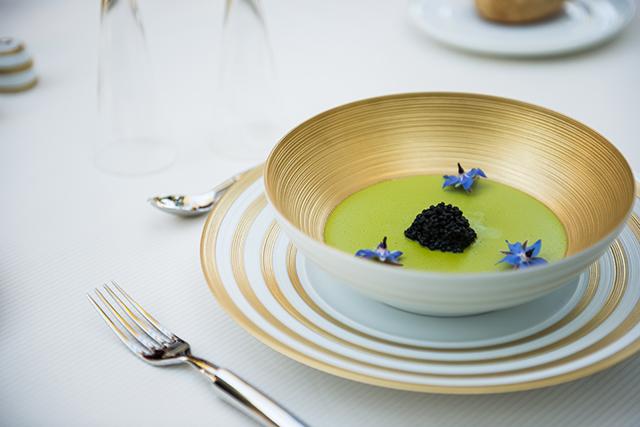
Everyone who has ever been to fashionable restaurants knows that they serve food exclusively on luxury tableware. And this is not just showing off status—it is a presentation of the atmosphere of both the restaurant itself and the masterpiece from the chef. In this setting, every plate serves as a canvas, while the cutlery and glassware complete the overall picture.
While aesthetics are important, it is equally vital to select the proper plate shape for the specific dish, as well as the right utensils and a glass that complements the beverage pairing. By the way, very many Michelin chefs act as co-authors of elegant collections that porcelain manufactories produce. The point of such lines is not just to create something fashionable, but to create something super convenient and suitable for a specific context.
Gastrophysics In Food Presentation
A discipline such as gastrophysics has proven that the shape of tableware directly affects our expectations and even our taste buds.
For example:
- Round shapes are associated with sweetness and mildness. Food served on perfectly round plates is generally perceived as slightly sweeter and softer in flavor.
- Bold, sharp angles bring out excitement, brightness, and zest. Choosing a square or rectangular canvas instantly signals the mind to get ready for something savory, bold, beautifully complex, or spicy.
It is no less important to choose plates so that they have not just the right volume, but also enough free space. At the same time, each shape requires a corresponding plating geometry.
Color And Decor Of Tableware
These are incredibly powerful tools to guide appetite and play with flavor perception. While the body sets up our overall layout, the plate’s color actually primes the brain for a specific taste before we even take that first bite. And the right pattern or details just pull the whole dish together.
- White makes the natural colors of the food pop with outstanding contrast. Plus, it tricks our brains into feeling safe and expecting a touch of sweetness.
- Black creates a premium, intimate contrast. It works very well for vibrant, monochromatic, or light-colored ingredients, while highlighting salty, earthy, mushroom, and umami flavor profiles.
- Blue actually tones down the appetite, but we find it ideal when we want to bring out a super fresh vibe—like serving seafood on a bed of ice.
- Warm tones make dishes feel more familiar, enhancing the perception of heartiness and home-cooked comfort.
- A glossy finish gives the food some extra shine and energy.
- Velvety matte shells bring a timeless, luxurious soul to the table, celebrating the stunning texture of handcrafted art.
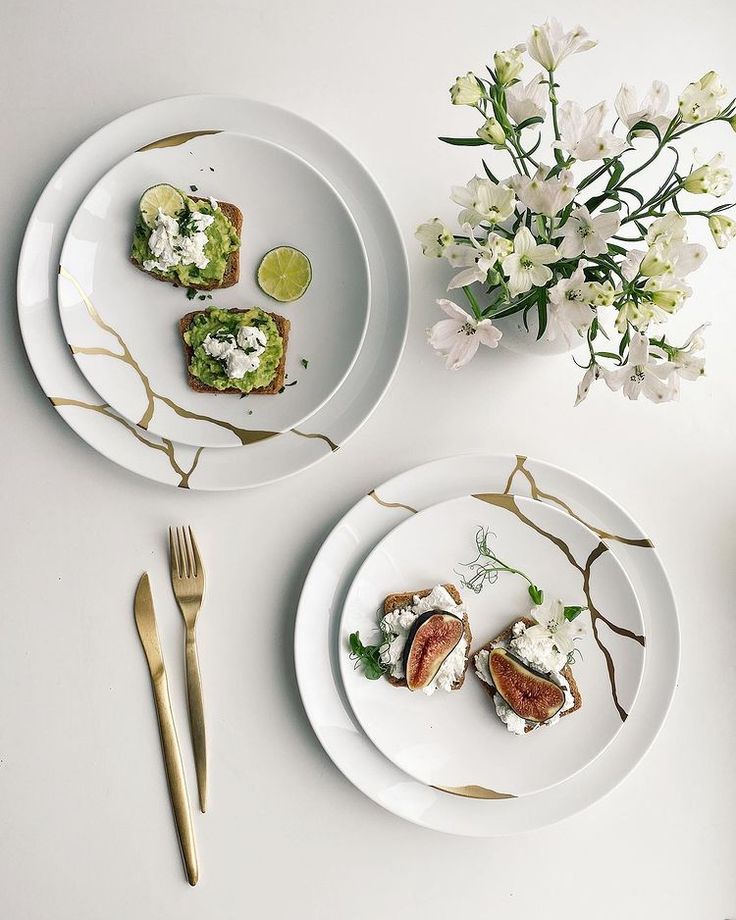
Tableware Pairing Ideas: Matching Collections, Shapes, And Decor
Besides shape, color, and finish, you should also consider the plate for its purpose. Therefore, pay attention to which type you choose. It is silly to suggest a meat dish on a dessert plate or a dessert on a dinner plate.
- Hot main courses are generally served on large, flat charger plates. This style offers ample room for difficult sides and sauces while maintaining the necessary negative space. Standout opportunities include J.L Coquet’s Swan Colors, featuring a delicate matte texture, embossed concentric lines, and a soft color palette. Another superb option is Rosenthal Swarovski Idyllia, which offers a bright, jewelry-inspired design incorporating iconic crystals.
- When you are serving steaks, duck, fish, or any multi-component mains, a standard dinner plate is our go-to. To make the presentation look stunning and styled just right, use Ginori 1735 Il Viaggio di Nettuno for fish—its neoclassical mythological illustrations, bold contrasting backdrops, and precious gold detailing look incredible. And for meat dishes, take the gorgeous Haviland Infini White with its hand-engraved, asymmetrical radial patterns.
- For a variety of hot second courses, you will need a main course plate. This can be the Sieger by Fürstenberg Ca’ d’Oro —its black-and-white prints and Venetian Gothic vibes look fantastic with that hand-painted 24-karat gold leaf trim. Or a Pinto Les Champignons art plate with a detailed handmade mycological illustration. And if we are going for a gourmet plate, Jaune de Chrome Song Ocre brings an entirely memorable, cosmic vibe with its incredibly complex signature glaze.
- For dressed soups, you need tableware that is also capable of retaining heat and concentrating aromas. For a high-quality and atmospheric display, we advise the soup plates Coralla Maiuri Michelangelo — this is classic Italian china that looks like an art object with its uncommon decor. Also, liquid dishes will look tasty in Jaune de Chrome Cyclone items, where Limoges porcelain has a futuristic design thanks to a remarkable porcelain baking technology.
- For pasta, risotto, and cream soups, you must utilize pasta bowls or deep plates with a wide rim. The Fürstenberg Fluen Shifting Colors hat-plate with a fine gradient transition of watercolor hues looks quite breathtaking. Or the gorgeous deep pasta plate made of handmade biscuit porcelain Hering Berlin Cielo, which has, as a special thing on the edges, a very fine through-perforation, creating a soft, airy texture and a feeling of weightless lace.
- Clear broths and purée soups are traditionally better to pour exactly into deep bouillon cups with a stand underneath in the form of a small saucer. For example, Raynaud Cristobal Émeraude with a juicy design in the form of coral branches for seafood soups, or Sieger by Fürstenberg Stella Satin White with a delicate, velvety-to-the-touch matte surface for the rest.
- Appetizers, charcuterie, seafood platters, bruschetta, and hot starters demand plates that are neither too deep nor completely flat. Outstanding options include Jaune de Chrome’s Dune collection with a glaze inspired by sand dunes, and Haviland’s Clair de Lune from Limoges, decorated with delicate platinum detailing.
- If you have a unique salad recipe with an abundance of greens, sauce, or dressings, then pay attention to the salad bowls such as Bernardaud Ecume White with a refined texture and matte rims decorated with a very fine engraving, as well as the luxurious plate Rosenthal Sanssouci Weiss whose design exactly replicates the stucco ceilings of the legendary palace.
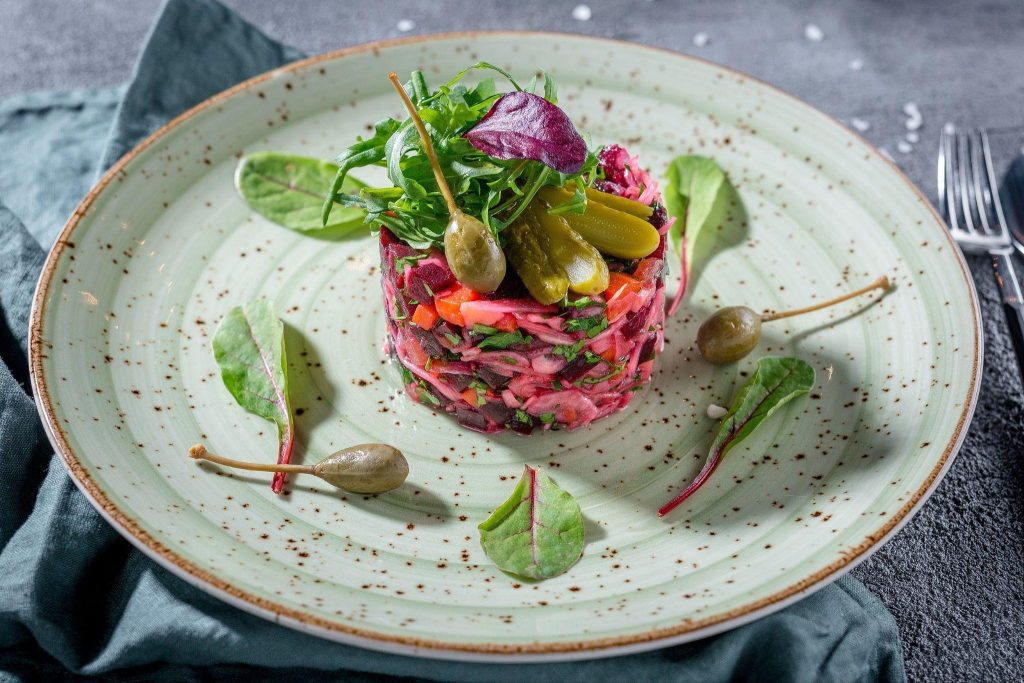
- Dessert plates for gorgeous cakes, delicate tarts, and pastries are your chance to be playful, often bringing a splash of bold color and exquisite artistry to the finale of a meal. Look at Ginori 1735 Florenza, a pretty piece alive with intricate historical marks and fine, storytelling lines. For refreshing, fruit-filled creations, we love Gien Oiseau Bleu Fruits and its luscious watercolor illustrations of sun-ripened fruit.
- Meanwhile, for a more dramatic presentation of a slice of pie, Christofle’s Malmaison Riviera presents a flashy look with its signature chased palm leaf composition. For desserts, tiered stands are also relevant: for example, the monumental Christofle Malmaison Impériale Platinum in the Empire style, or the luxurious L’Objet Fortuny with an intricate graphic pattern and rich hand-painting in 24-karat gold.
Recommendations On Buying
Please note that all the brands and collections we have described belong to the luxury segment — meaning they have expensive materials and expensive decor. To have total peace of mind that you’re getting the real deal, we always recommend ordering through trusted suppliers or buying from authorized boutiques. The nice thing is, these brands suggest the flexibility to accommodate your budget by allowing you to buy individual pieces one by one.