How to Clean a Hairbrush: The Ultimate Guide to a Gunk-Free Mane
Key Takeaways: To clean a hairbrush effectively, remove tangled strands with a comb, soak the bristles in warm water mixed with a few drops of clarifying shampoo for 10 minutes, scrub gently with a toothbrush, and air-dry face down. Regular cleaning prevents oil, dead skin, and product buildup from transferring back to your scalp.
Think about the last time you took a close look at your hairbrush. If you see a gray, lint-like fuzz nesting at the base of the bristles, you are likely wondering how to clean a hairbrush without ruining it. It is one of those grooming tasks that feels easy to ignore until you realize that brushing your hair with a dirty tool is essentially like washing your face and then drying it with a muddy towel.
Every time you pull that brush through your hair, it picks up more than just tangles. It collects sebum (your natural scalp oils), dead skin cells, remnants of hairspray or dry shampoo, and even dust mites. If you don’t clear that debris out, you are just redepositing old grime back onto your fresh blowout.
Why Your Hairbrush Gets So Gross
It is a bit of a science experiment living on your vanity. Our scalps naturally shed skin and produce oil to protect the hair shaft. When you brush, those elements cling to the bristles. Over time, hairspray and serums act like glue, trapping environmental dust and lint into a stubborn layer of “fuzz.”
According to dermatological experts at the Cleveland Clinic, a dirty brush can actually serve as a breeding ground for bacteria and yeast. If you have a sensitive scalp or struggle with dandruff, an unwashed brush might be contributing to the irritation. Essentially, keeping your tools clean is an extension of your skincare routine.
Preparing for the Deep Clean
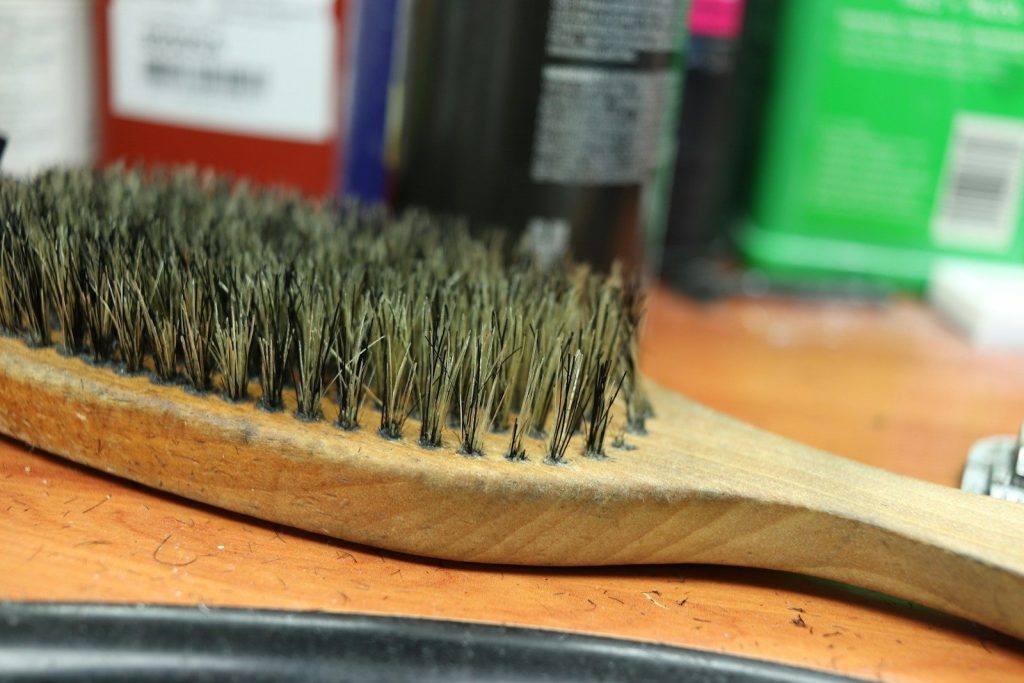
Before you start scrubbing, you need to identify what kind of brush you have. The method for a plastic vent brush is very different from the one you’d use for a high-end boar bristle or wooden handle tool. Wood and natural bristles are sensitive to moisture and can crack or rot if they stay submerged for too long.
What You Will Need
- A tail comb or a pair of scissors
- A bowl of warm water
- Clarifying shampoo or a gentle dish soap
- An old toothbrush
- A clean towel
How to Clean a Hairbrush: A Step-by-Step Guide
Regardless of the model, most brushes follow this general workflow. Just remember to be gentle with the “bed” of the brush—the cushioned part—as trapping water inside can lead to mold.
- Remove the Hair: This is the most satisfying (and slightly cringey) part. Use the pointed end of a tail comb to lift the matted hair away from the base. If the hair is wound tight, carefully snip through the layers with scissors, taking care not to cut the bristles.
- Prepare the Bath: Fill a sink or a medium bowl with warm water. Add a squeeze of shampoo. If your brush is particularly oily or covered in thick styling creams, a grease-cutting dish soap works wonders.
- The Soak: If your brush is all plastic or metal, you can submerge it completely for about 5 to 10 minutes. If it has a wooden handle or a squishy fabric cushion, do not soak it. Instead, dip the bristles into the water repeatedly without letting the base get waterlogged.
- Scrub the Base: Use an old toothbrush to get between the rows. Focus on the bottom of the bristles where that “lint” tends to settle. This is where the friction helps break down the sticky product buildup.
- Rinse and Shake: Rinse the bristles under cool running water. Give it a good shake over the sink to get as much water out of the cushion as possible.
- Dry Properly: Lay the brush bristle-side down on a clean towel. Drying it face down allows any water trapped in the handle or the cushion to drip out, rather than settling and causing a musty smell.
Common Mistakes to Avoid
Even with the best intentions, it is easy to accidentally damage your favorite styling tools.
- Using Boiling Water: You might think extra heat means extra sanitized, but boiling water can melt the glue holding the bristles in place or warp plastic handles.
- Forgetting the Handle: We focus so much on the bristles that we forget the handle is covered in hair oils and hand lotion. Give the whole thing a quick wipe.
- Using a Blow Dryer: Trying to speed up the drying process with a hair dryer can heat up the plastic or wood too quickly, leading to cracks or melted bristles.
- Soaking Wood: Wood is porous. If you soak a wooden brush, it will swell, and when it dries, it will likely crack or lose its finish.
Comparison: Plastic vs. Natural Bristle Care
| Feature | Plastic/Synthetic Brushes | Boar Bristle/Wooden Brushes |
| Soaking Time | 10 minutes (full immersion) | Never submerge; dip bristles only |
| Best Cleaner | Clarifying shampoo or dish soap | Gentle sulfate-free shampoo |
| Frequency | Once every 2 weeks | Once a month |
| Durability | High; handles moisture well | Low; moisture can cause wood rot |
How to Clean a Hairbrush Based on Type
If you have a specialized brush, you might need to tweak your technique. For example, the American Academy of Dermatology suggests that keeping hair tools clean is vital for overall scalp health, but they emphasize using the right cleansers to avoid stripping the materials.
Paddle Brushes
These usually have a large air cushion. When you submerge them, water gets trapped inside the tiny air hole. To avoid this, use the toothbrush method rather than the soaking method. If water does get in, squeeze the cushion repeatedly while facing down to “pump” the water out.
Round Brushes
Because the hair wraps all the way around, these are the hardest to de-hair. Use your scissors to cut a straight line down the length of the brush, then peel the hair off like a carpet.
Boar Bristle Brushes
Treat these like your own hair. Use a very gentle shampoo and avoid any harsh chemicals. Natural bristles are more prone to breaking if they become too dry, so some people even use a tiny drop of conditioner on them after cleaning to keep them supple.
Pros and Cons of Frequent Cleaning
Pros:
- Better Hair Health: You aren’t redistributing old bacteria and oils.
- Product Efficacy: Your styling products work better when they aren’t fighting through a layer of old residue on your brush.
- Saves Money: A well-maintained brush can last for years, whereas a neglected one will eventually need to be tossed due to odors or buildup.
Cons:
- Time Consuming: It adds an extra 15 minutes to your weekend routine.
- Wear and Tear: If you are too aggressive with the scrubbing, you might lose a few bristles over time.
When Is It Time to Throw It Away?
Sometimes, knowing how to clean a hairbrush isn’t enough. If your brush is missing more than 10% of its bristles, or if the little protective balls at the ends of the plastic bristles have fallen off, it is time for a replacement. Brushing with “naked” plastic bristles can scratch your scalp and cause micro-tears in your hair cuticle, leading to frizz and breakage.
Generally, a high-quality brush should be replaced every 6 to 12 months if it is used daily, though wooden and high-end boar brushes can last much longer with proper care.
Practical Examples of Buildup
Imagine you use dry shampoo on Monday. On Tuesday, you brush your hair. Those starchy particles move from your hair to your brush. On Wednesday, you use a shine serum. Now the starch is sticky. By Thursday, the dust floating in your bathroom air has settled into that sticky starch. If you don’t clean that brush by Friday, you are essentially “styling” your hair with Monday’s dirt and Thursday’s dust.
FAQ
How often should I clean my hairbrush?
Ideally, you should remove the loose hair after every use. For a deep wash, aim for once every two weeks if you use a lot of styling products, or once a month if you have a minimal routine.
Can I put my hairbrush in the dishwasher?
It is tempting, but generally not recommended. The high heat and harsh detergents used in dishwashers can degrade the plastic, melt the glue, and ruin the finish on the handle. Stick to hand washing in the sink.
What is the gray fuzz on my hairbrush?
That fuzz is a mixture of dead skin cells, sebum, hair product residue, and textile fibers from your clothes or bedding. It is a sign that your brush is overdue for a deep clean.
Can I use vinegar to clean my brush?
Yes, a mixture of equal parts warm water and white vinegar is a great disinfectant. It is especially helpful if you are trying to kill bacteria or if you have recently recovered from a scalp issue.
Does cleaning my brush help with greasy hair?
Absolutely. If your hair feels greasy immediately after brushing, your tool is likely covered in old oils. Cleaning it ensures you are starting with a neutral surface.
Maintaining your tools is one of the simplest ways to upgrade your hair care game. Now that you know exactly how to handle different materials and why that buildup happens, your scalp will thank you.